How to Build a Jewelry Capsule Wardrobe (The Trick Is Owning Less)
October 19, 2026 · 6 min read
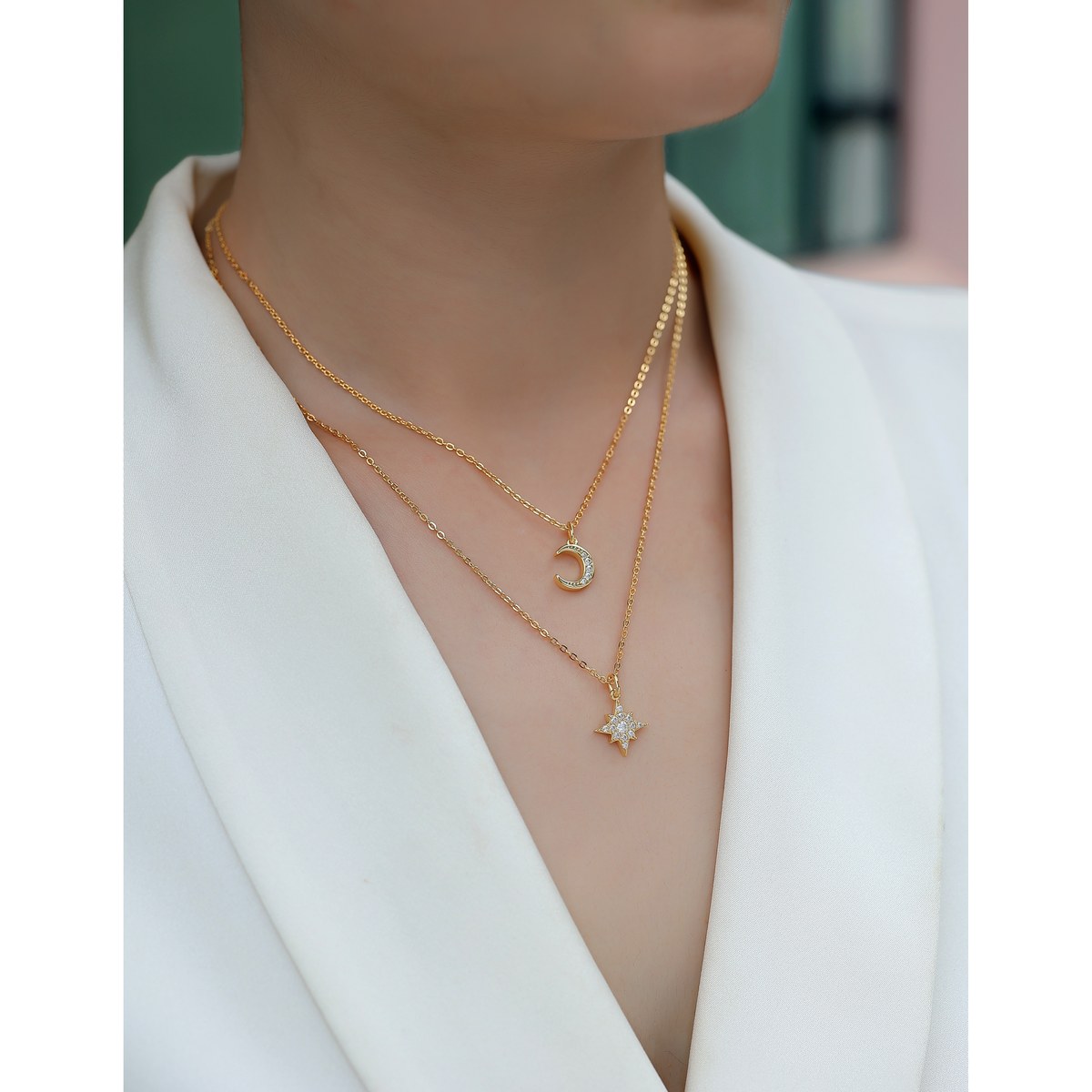
Here's the counter-intuitive thing nobody tells you about jewelry: the woman who always looks effortlessly put-together usually owns less jewelry than you do, not more. She doesn't have a bigger jewelry box. She has a smaller one, and every piece in it earns its place. If your jewelry box is overflowing and you still stand in front of the mirror thinking "I have nothing to wear," the problem was never that you need another pair of earrings. The problem is that your pieces don't work as a team.
We borrowed the "capsule wardrobe" idea from clothing decades ago and somehow never applied it to jewelry, even though jewelry is the place it pays off fastest. A clothing capsule works because every piece goes with every other piece, so getting dressed stops being a puzzle. Jewelry is exactly the same, only the stakes are lower, the pieces are smaller, and the payoff — that calm, finished feeling of always having the right thing — arrives almost immediately. You don't need a year of curating. You need one honest afternoon and a willingness to stop buying for a minute.
Why "more jewelry" is the problem, not the solution
Most jewelry boxes aren't collections. They're accumulations. A gift here, an impulse buy on sale there, a pair of earrings you bought for one specific dress, a ring that matched an outfit you no longer own. Individually, each piece was fine. Together, they're noise — three different metal colors, a mix of loud and quiet stones, things that only work with one top and look wrong with everything else.
That's the real source of the "nothing to wear" feeling, and it has nothing to do with quantity. It's decision fatigue. When nothing coordinates, every choice becomes a compromise, so you default to the same two safe pieces and ignore the rest. The box gets fuller, and your actual options get smaller. This is the exact opposite of what you'd expect, and it's the whole reason a capsule works.
A capsule doesn't mean deprivation. It means every piece you keep has a job, and every job is covered. Once the box is coherent, adding one new piece becomes easy to evaluate — either it fits the team or it doesn't. You stop buying things you'll never wear, which, over a year, saves you more than any sale ever will.
The six pieces that earn their place
You can build this with five or six pieces, and you probably already own most of them. The work isn't buying — it's choosing which of what you have gets to stay.
One delicate everyday necklace. This is your anchor, the piece you reach for without thinking. It should be quiet enough to sleep in and lovely enough that you never bother taking it off. A slim chain with a single moissanite pendant does it — it catches light but never shouts. Think of a piece like the Milky Way Whisper necklace: present, but never competing with your face.
One pair of stud earrings you can wear every day. Studs are the highest-leverage piece in any box for a simple reason — they frame your face the way we talked about in matching earrings to your face shape, and a clean, bright pair goes with literally everything. A halo stud gives you the sparkle of something fancier with the effort of nothing at all.
One simple band or solitaire ring. This is the piece that makes your hands look finished whether you're at a desk or a dinner. It doesn't need to be an engagement ring — it just needs to be the one ring that always looks right. A pavé eternity band or a clean diamond-gleam ring does the job quietly.
One piece you genuinely love — the statement. Notice the number: one. A capsule isn't all neutrals. It's mostly neutrals with a single piece of personality, so that personality actually shows. Pick the thing that makes you smile, whatever it is, and let it be the loudest thing you own.
One bracelet or cuff. Optional but useful — it gives your wrist something to do when the rest is quiet, and it's the easiest place to experiment with stacking.
That's it. Five or six pieces, each with a job, none of them fighting the others.
Choose one metal, then stop worrying about it
Here's the rule that quietly does most of the work: pick one dominant metal and let everything else follow it. If you lean gold, make your anchors gold. If you lean silver — and honestly, 925 sterling silver is the easiest place to start because it's affordable, durable, and looks good on almost every skin tone — make them silver.
This matters more than color theory. The reason mixed-metal jewelry can look "off" isn't that gold and silver can't coexist — it's that random mixing looks accidental. A capsule built on one metal reads intentional without trying. If you want to mix, do it on purpose: one contrasting piece against a coherent silver base reads as a choice, not an accident. We covered this more deeply in mixing gold and silver, but the capsule version is simple: coherence first, contrast later.
And don't overthink whether the metal "matches your undertones." If you're curious, the guide in matching jewelry to your skin tone will help — but the honest truth is that a piece you wear every day starts to look like you, and that matters far more than any warm-versus-cool chart.
The capsule is a floor, not a ceiling
This is the part most "minimalism" advice leaves out, and it's the part I care about most. A capsule wardrobe isn't a rule you have to obey. It's a foundation you can stop thinking about. Once your five or six core pieces are in place, you are completely free — to keep the sentimental ring your grandmother gave you even though it matches nothing, to buy the ridiculous statement earrings on a whim, to accept a gift that doesn't coordinate and wear it anyway, because you love the person who gave it.
The capsule doesn't forbid those pieces. It just means they're additions, not your entire strategy. When everything else already works, a wildcard piece becomes a delight instead of a burden. You're not deciding whether it "goes" with your collection — you're deciding whether it makes you happy, which is the only question that ever really mattered.
The short version
- Owning less is the trick, not more. A full jewelry box that doesn't coordinate gives you fewer real options, not more.
- A capsule is five or six pieces with jobs: a delicate everyday necklace, a daily stud, a simple ring, one statement piece you love, and an optional bracelet.
- Pick one dominant metal and let the rest follow — coherence reads as intentional; random mixing reads as accidental.
- Every piece should be able to layer with the others, which is where the "finished" feeling actually comes from.
- The capsule is a floor, not a ceiling. Sentimental pieces, gifts, and impulse buys are free to stay — they're additions, not the whole strategy.
- Start with what you already own. The work isn't buying six new things; it's choosing which of your current pieces get to be the team.
Keep reading
More from the Journal