How to Mix Gold and Silver Jewelry (The 'Never Mix Metals' Rule Is Dead)
October 11, 2026 · 6 min read
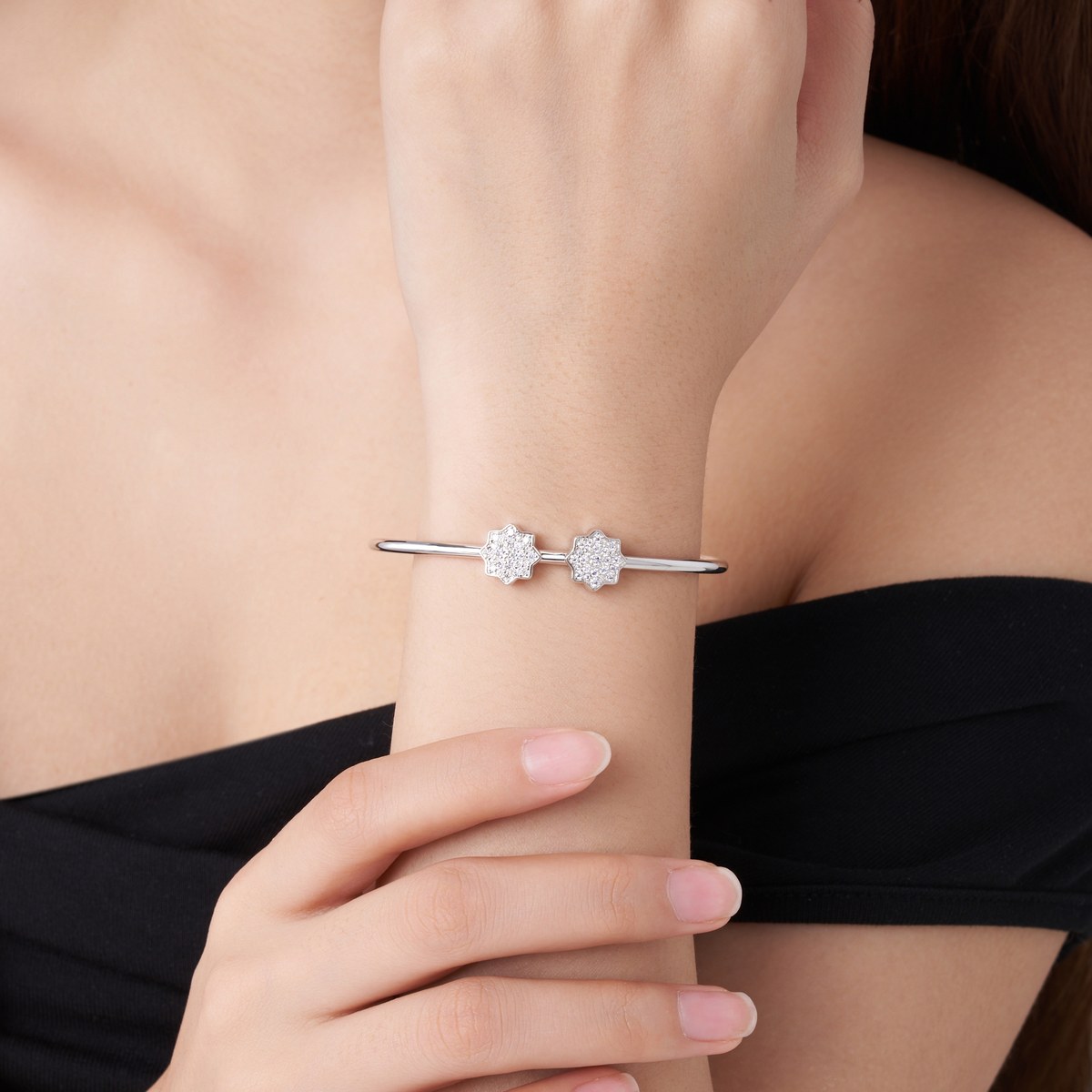
There's a rule a lot of us absorbed young and never questioned: don't mix gold and silver. Like "no white after Labor Day" and "your bag has to match your shoes," it got handed down as though it were a law of physics rather than a fashion preference from one specific moment in time. Here's the part nobody bothers to say out loud: that rule is dead, and it was never really true to begin with. The most effortlessly put-together people you noticed this week were almost certainly wearing both metals at once — you just didn't clock it, because it looked so natural. Mixing metals isn't the mistake you were warned about. Done even halfway right, it's the fastest shortcut to looking like you didn't try too hard, which is, of course, the entire point.
Where the rule came from (and why it died)
The "never mix metals" rule isn't ancient. It's a mid-century idea, and like most fashion laws from that era, it was about signaling more than aesthetics. In the 1950s and 60s, a woman who wore a matching gold set — earrings, necklace, bracelet, all the same finish — was quietly announcing that she could afford to buy a set. Coordination was a status marker. Mixing metals, by extension, read as not having the means to match. The rule wasn't about what looked good; it was about what looked wealthy.
So the rule was never really about beauty, and that's exactly why it fell apart. As soon as style stopped being about displaying a matching set and became about expressing a point of view, the prohibition lost its reason to exist. Today the opposite is closer to the truth: an all-matching set often reads as stiff and store-bought, while a deliberate mix reads as considered, personal, a little bit lived-in. If you want proof, look at how the layered necklace became a permanent fixture — layering is just mixing at different lengths, and mixing metals is just layering at different colors. The taboo collapsed because the thing it was actually about — matching as wealth — stopped mattering.
That doesn't mean "just throw anything together." It means the old binary (match, or be wrong) should be replaced with something smaller and more useful.
The one principle that actually works
Forget "match your metals." The rule that actually survives contact with a mirror is this: pick an anchor, and let the other metal be the accent.
Think of it like a room you're decorating. You don't need an exact 50/50 split; you need a dominant tone and a little contrast so the eye has somewhere to land. In jewelry terms, that usually means something like 70% one metal and 30% the other. The anchor does the heavy lifting and keeps the look grounded; the accent is what makes it feel intentional instead of accidental.
Silver is a genuinely forgiving anchor, which is why it keeps showing up as the neutral in this conversation — the same way a cool, bright stone like moissanite reads well against almost everything. It sits quietly next to gold without competing, and it doesn't demand that the rest of your outfit agree with it. So the easiest entry point into mixing metals is simple: wear silver as your base, and bring in one piece of gold as the spark. A thin gold ring among your silver, a gold chain layered over a silver one, a single gold stud paired with a silver cuff. You don't need balance; you need a clear majority and a little deliberate friction.
That friction, by the way, is the whole secret. The reason mixed metals look good is the same reason a stacked ring looks better than a single band: contrast makes jewelry look like your life rather than a store display. Uniformity is what looks artificial. A little mismatch is what looks real.
How to mix it in practice
You don't need a new jewelry box for this. You need a few reliable moves.
The ring stack. This is the lowest-stakes place to start, because hands are always in motion and nobody studies them too closely. Put your everyday silver band — the kind of classic 925 silver piece you reach for without thinking — on first, then slide one thin gold band beside it. Silver on the outside, gold in the middle, or the reverse. The gold doesn't need to be expensive; a slim, simple band does more for a stack than a heavy statement piece ever will.
The wrist stack. Bracelets and cuffs are the easiest canvas for mixing because they naturally stack. Start with a silver cuff or bangle as the anchor, then add one gold-toned bracelet in a different width or texture. The change in texture does half the work for you — a smooth silver cuff next to a delicate gold chain reads as deliberate even though all you did was stack two things you already owned.
Necklace and earrings. The cleanest version of the principle: if your necklace is silver, let one earring be gold — or keep both silver and let a gold pendant be the single accent. What matters isn't which piece is which; it's that one metal clearly leads. If you already know how to match jewelry to your neckline, you're most of the way there: you're just adding a color contrast on top of the shape logic you're already using.
Finish matters more than color. Here's the honest nuance most guides skip: matte and shiny play together differently than two metals do. A high-polish silver next to a brushed gold can clash harder than a polished silver next to a polished gold. If a mix ever feels "off," don't blame the metals — look at the finishes. Keeping finishes similar (both shiny, or both softly textured) will rescue almost any combination.
And one honest caveat, because this is supposed to be useful advice and not a cheerleading session: if a mix feels wrong to you, you're not failing a style test. The whole point of the rule dying is that there's no single correct answer anymore. Some people love a loud 50/50 mix; some prefer a whisper of gold at the edge of an all-silver look. Both are right. The only real mistake left is wearing something that makes you self-conscious.
The short version
- The "never mix metals" rule is dead — it was a mid-century status marker (matching sets signaled money), not an aesthetic law.
- Replace it with an anchor: pick a dominant metal and let the other be the accent, roughly 70/30.
- Silver is the easiest anchor — it's neutral, sits quietly next to gold, and doesn't ask the rest of your outfit to agree with it.
- Start small: a thin gold band in your silver ring stack, or one gold bracelet against a silver cuff.
- Texture and finish matter more than color — polished-with-polished works; a matte/shiny clash is usually the real culprit when a mix feels "off."
- One hero, one accent. You want a clear majority and a little deliberate friction, not a perfect 50/50.
- If it feels wrong to you, skip it. The rule is dead — there's no test to pass anymore.
Keep reading
More from the Journal