How to Match Earrings to Your Face Shape (The Chart Is Backwards)
October 15, 2026 · 6 min read
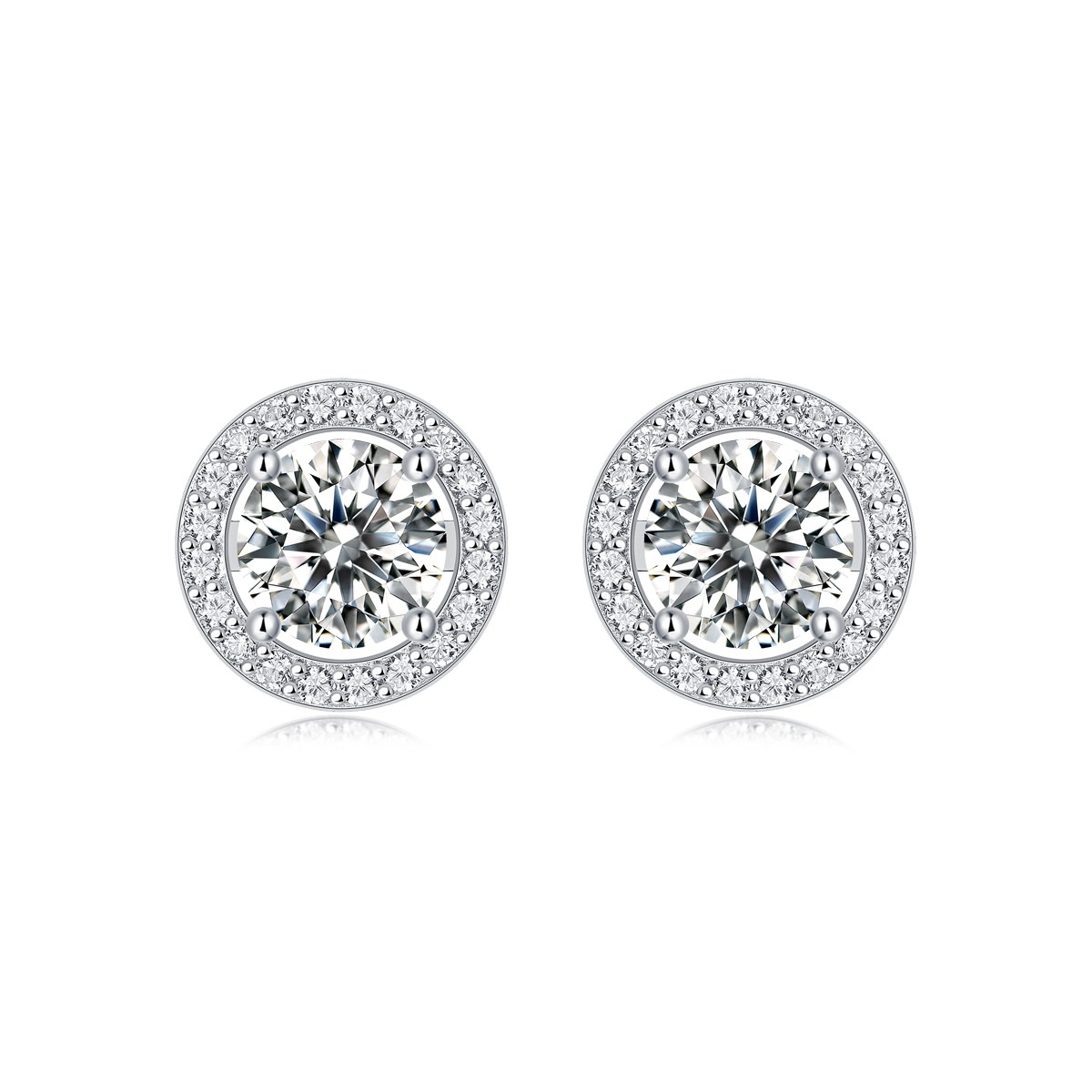
There's a chart you've probably seen a hundred times: round face, wear long earrings; square face, soften it with hoops; heart face, balance it with something wide at the bottom; oval face, congratulations, you can wear anything. It feels satisfying to read because it promises certainty, but here's the part nobody bothers to say out loud — that chart is mostly backwards. Not because the shapes are wrong, but because it's treating your face like a geometry problem drawn on paper, and your face is not a shape. It's a moving thing, made of bone and muscle and the way light falls on it, and it changes every single time you smile, turn your head, or wear your hair differently. The chart can't see any of that.
Earrings, meanwhile, are the most powerful piece of jewelry you own, for a reason almost no guide says plainly: they're the only piece that lives directly beside your face. A necklace sits on your chest. A ring sits on your hand. But an earring sits inside the frame of your face, and that means it quietly changes how people read the entire picture — the length of your jaw, the softness of your cheekbones, the brightness of your eyes. Get it right and you don't need to explain anything. Get it wrong and you'll feel vaguely "off" all day without knowing why.
Why the face-shape chart keeps failing you
The chart fails for the same reason a lot of style advice fails: it optimizes for a photograph, not for a person. In a still, straight-on photo, a face can look like a neat oval or a clean square, and the chart can hand you a rule that works for that one frozen frame. But you don't live in that frame. You live in motion, at an angle, mid-sentence, under restaurant lighting, with your hair down or pulled back.
Here's the honest core of it: your face shape isn't one shape. Almost nobody has a pure "round" or "square" face. Most of us are a blend — oval with a slightly wider jaw, heart with a softer forehead than the chart allows for. So when the chart tells you "long earrings for a round face," it's answering a question you never actually asked. It's prescribing for a category you don't quite belong to, and the result is the thing everyone quietly feels but won't say: you try the "correct" earring and it still looks wrong, so you assume the problem is your face, when the problem was always the chart.
That's not a reason to give up on the whole idea. It's a reason to swap the chart for two things that actually hold up in a mirror.
The two levers that actually matter
Strip the whole face-shape conversation down and you're left with two levers, and they do all the work:
Where the visual weight lands. Every earring has a point where its visual weight sits — a stud's weight is tight against the earlobe, a drop earring's weight hangs lower, a chandelier spreads it wide. The question isn't "what shape is my face," it's "where do I want the eye to rest?" If you want to draw attention up toward your eyes, wear something with its weight high and close. If you want to lengthen your face, let the weight drop lower. If you want to soften a strong jaw, pull the eye sideways with something wider at the bottom. Notice that this has nothing to do with memorizing a shape — it's about choosing where the eye goes.
The direction of the line. Earrings draw a line, and the line talks to the lines already in your face. A long, vertical drop echoes and extends a vertical line; it makes a face read longer. A round hoop draws a circle, which echoes the roundness of cheeks and eyes and makes the whole thing read softer and more open. A sharp, geometric earring introduces an angle that can either contrast with a soft face or amplify a strong one. You don't need to classify your face to use this — you just need to look in the mirror and notice whether your features lean more vertical, more round, or more angular, then decide whether you want to echo that or gently contrast it.
That last word is the whole secret: echo or contrast. It's the same principle you already know from matching jewelry to your neckline — the jewelry either cooperates with the shape it's next to or fights it. With earrings, "the shape it's next to" is your face, and the only real question is whether you want the earring to follow the lines that are already there, or to push against them on purpose.
A short, honest shape-by-shape note
If you still want a starting point — and it's genuinely useful to have one — here's the honest, stripped-down version. Treat it as a first guess, not a law.
Round face. You likely want to introduce a little length, so lean toward vertical lines — a slim drop, a long stud that points downward. The classic "long earring for a round face" advice is right for this one reason: it adds the vertical line the face is missing. But it's the line, not the length, that matters, which is why a short-but-angular earring works too.
Square face. The chart says "soften with hoops," and the reasoning is sound — a curve balances a strong jaw. But you can get the same effect from anything round or curved, including a bright stud with a halo that catches light and softens the whole look without adding bulk.
Heart face. The goal is usually to balance a narrower chin with a little weight at the bottom, so earrings that widen as they drop — a teardrop, a gentle chandelier — do the job. But be honest with yourself: if your chin isn't actually that narrow, this rule stops applying. That's the chart's real weakness, and it's fine to skip it.
Oval face. The chart loves to say "you can wear anything," and it's mostly true, but it's also useless as advice. The better question for you is the one everyone should be asking: where do I want the eye to rest today? That, not your face shape, is what should pick the earring.
Long face. The chart barely mentions you, which tells you everything. You'll usually want the opposite of the round-face advice — width instead of length, so hoops, studs, and anything that pulls the eye sideways rather than down.
And the honest caveat that belongs at the end of every style guide: these are shortcuts for when you're unsure, not tests you can fail. A bright, well-cut stone — the kind that works the way moissanite does, catching light without demanding to be the loudest thing in the room — reads well on almost every face, because sparkle is a softener and a brightener at once. If a piece makes you feel like yourself, the chart doesn't get a veto.
The short version
- The face-shape chart is backwards — it treats your face as a static shape, but your face moves, blends shapes, and changes with every smile and hairstyle.
- Earrings are your highest-leverage piece because they sit directly beside your face and change how the whole thing is read.
- Two levers do the work: where the visual weight lands, and the direction of the line (vertical = longer, round = softer, angular = sharper).
- The only real choice is echo or contrast — follow the lines already in your face, or push against them on purpose.
- Treat the shape guide as a first guess, not a law — round wants length, square wants curve, heart wants bottom weight, oval should ignore the chart, long wants width.
- When unsure, reach for sparkle. A bright, well-cut stud flatters nearly every face, because light softens and brightens all at once.
Keep reading
More from the Journal