How to Match Jewelry to Your Skin Tone (And Why the Rule Is Overhyped)
October 3, 2026 · 6 min read
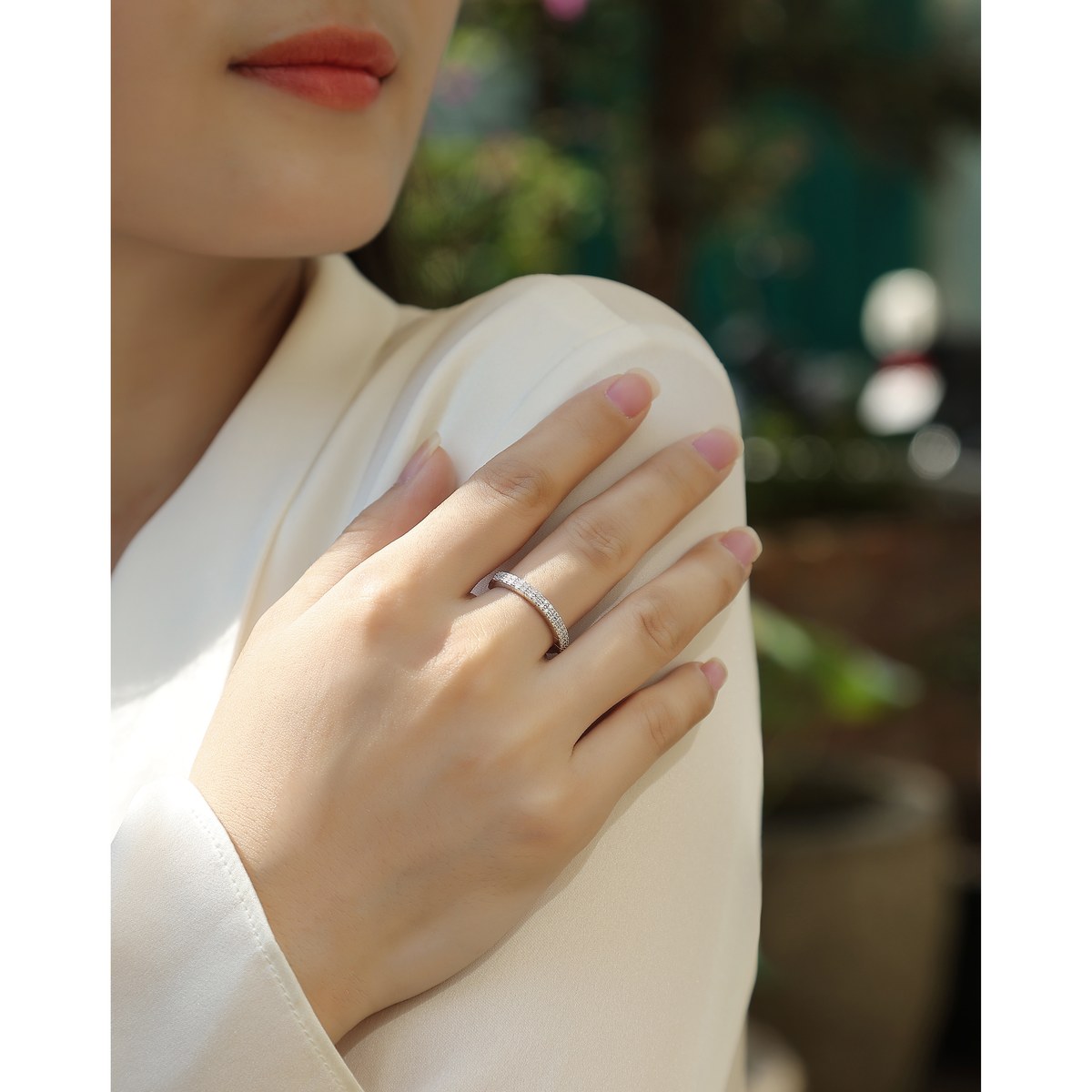
Somewhere between "find your undertone" and "gold is for warm skin, silver is for cool skin," a perfectly reasonable guideline hardened into a rule people now treat like a blood test. You're told to check the veins in your wrist, hold up a white sheet, squint at your jewelry, and only then — armed with your official warm/cool classification — are you permitted to buy a necklace. Here's the honest version nobody prints: undertone is real, it matters a little, and it is nowhere near important enough to decide what you wear. The people with the jewelry boxes you envy are not the ones who memorized their undertone. They're the ones who stopped treating a soft preference as a requirement.
The undertone test, minus the mystique
Let's get the actual fact out of the way, because it does exist. Skin has an undertone — a subtle color cast beneath the surface — that leans one of three ways: warm (yellow, golden, or peachy), cool (pink, red, or bluish), or neutral (a mix that doesn't clearly land either way). This is genuinely a thing, and it genuinely nudges how metal and stone colors read against your skin.
The standard tests are the vein check (blue-green veins suggest warm, blue-purple suggest cool), the jewelry check (if gold flatters you more, you're warm; if silver does, you're cool), and the white-fabric check (does white brighten you or wash you out). All three are fine starting points. All three are also famously inconsistent — most people can't read their own veins with confidence, and a lot of people sit close enough to neutral that both gold and silver look fine on them. If you've ever taken the test twice and gotten two answers, that isn't you failing the test. It's the test being imprecise.
So treat it as what it is: a loose signal, not a verdict.
What matching actually changes
The real effect of getting your metal "right" is smaller and more boring than the guides imply. Silver, with its cool, bright luster, tends to make cool-toned skin look clearer and more rested; gold, with its warmth, tends to make warm-toned skin glow. That's it. That's the whole magic. It's a contrast-versus-harmony thing, not a right-versus-wrong thing, and the difference is usually a matter of degrees you'd only notice side by side in a mirror.
Meanwhile, the things that actually decide whether a piece looks good on you have almost nothing to do with undertone. Scale matters — a chunky piece on a slight frame overwhelms, a delicate piece on a strong frame disappears. Finish matters — high-polish reads dressier, matte reads more casual. And how you feel in it matters more than any of it, because a piece you're unsure about shows up in the way you carry yourself, and that reads louder than any metal choice ever will.
None of that is mystical. It's just honest: undertone is one small dial among several, and it's nowhere near the biggest one.
Silver's quiet advantage
Here's the part that rarely gets said, and it's worth saying plainly: silver is the most forgiving metal in the box. Its cool, neutral luster doesn't fight anyone the way a strong yellow gold can. On cool skin it harmonizes beautifully; on warm skin it still works, because its brightness reads as contrast rather than clash. That's why so many people who "aren't sure" of their undertone land on silver and never look back — it simply has the widest safe range.
And the stone you pair with it widens that range further. Moissanite, unlike the glass and low-grade cubic zirconia that dominate affordable jewelry, throws bright white fire with just a hint of warmth — which is exactly why it flatters across the undertone spectrum rather than sitting flat or yellow. It doesn't cloud or go hazy the way cheaper stones do, so the sparkle that reads well on you today reads the same a year from now. If you're weighing which stone to build around, our moissanite vs diamond breakdown lays out the honest trade-offs, and moissanite vs cubic zirconia explains why a hard stone beats a soft one over time.
The upshot: if you want to stop overthinking this, solid 925 silver with a hard, bright stone is about as close to "works on everyone" as jewelry gets.
When the rule is worth following
Undertone earns its keep in exactly two situations, and both are worth knowing.
When you're buying a gift. You can't ask someone's undertone — well, you can, but it's a strange question. This is where the guideline quietly earns its keep: if the person you're buying for wears gold, buy gold; if they wear silver, buy silver. You don't need to classify their skin, you just need to notice what they already reach for. It's the single most reliable signal there is, and it's free. (For more on getting the gift itself right, our gifts under $100 guide covers how to make a modest budget read as generous.)
When you're building a capsule. If you want a small collection where every piece goes with everything, leaning toward your undertone — warm golds or cool silvers — makes the mixing effortless. This is a coherence play, not a correctness play.
Everywhere else, break it without guilt. The rule exists to guide you when you're uncertain, not to veto a piece you love. Plenty of cool-toned people wear gold every day and look great doing it; plenty of warm-toned people would never give up silver. If a piece makes you feel like yourself, the undertone chart doesn't get a vote.
The short version
- Undertone is real but soft. It's a loose signal, not a verdict — most people can't even read their own consistently.
- What matching changes is small. Silver brightens cool skin, gold warms warm skin; that's the whole effect.
- The bigger levers are scale, finish, and how you feel. Those beat undertone every time.
- Silver is the most forgiving metal. Its cool luster has the widest safe range across skin tones.
- Moissanite flatters across the spectrum. Bright white fire with a hint of warmth, and it never clouds.
- Follow the rule when gifting or building a capsule. Break it everywhere else, without guilt.
Keep reading
More from the Journal