Moissanite vs Cubic Zirconia: The Honest Difference (and Why Cheap Looks Cheap)
September 30, 2026 · 6 min read
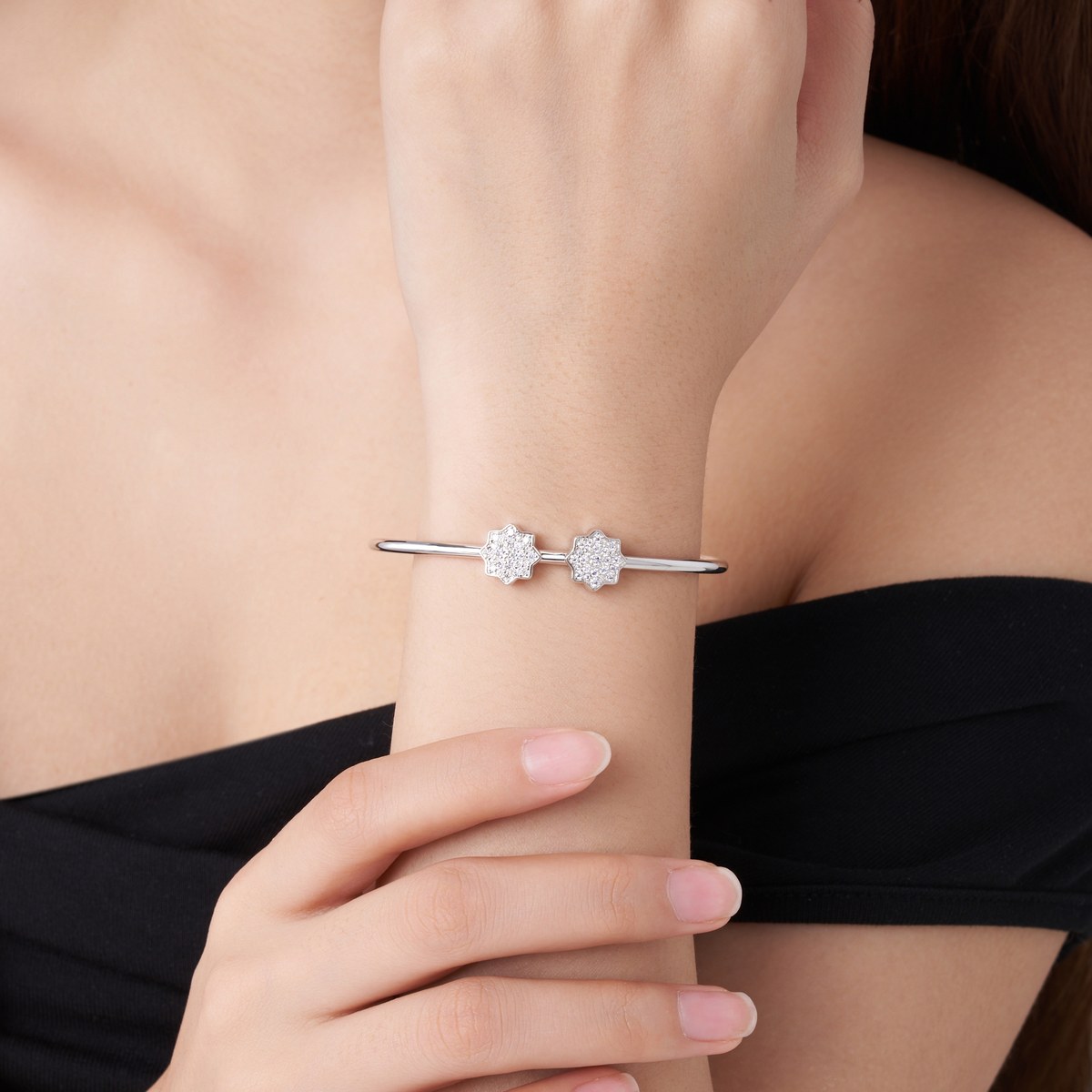
Cubic zirconia is the reason half the internet assumes moissanite is "fake." Someone bought a cheap CZ ring once, watched it go cloudy in three months, and now every lab-created stone that isn't a diamond gets filed under the same suspicion. That's the wrong lesson to draw. Moissanite and cubic zirconia aren't siblings — they're opposites in almost every way that actually matters. If you've been treating them as the same thing, this is the article that un-tangles them.
The confusion, and where it comes from
Both stones are clear, colorless, and sparkly. Both are lab-made. Both cost a fraction of a diamond. From across a counter, they genuinely look like the same category of thing.
But that's where the resemblance ends, and the confusion costs people real money — in both directions. Some people overpay for cubic zirconia thinking they're getting "a nice lab stone." Others skip moissanite entirely because one bad CZ experience convinced them all non-diamond stones are junk.
Here's the one-line version before we get into numbers: cubic zirconia is a cheap optical imitation of diamond. Moissanite is a real gemstone in its own right — it's silicon carbide, a different mineral that was discovered before it could even be made in a lab, and it outperforms diamond itself on one specific measure (fire). The two were never in the same league, and the spec sheet proves it.
The honest difference, number by number
Let's put the actual numbers down, because "which is better" is a lot easier to answer once you can see them.
Hardness. Cubic zirconia sits at 8 to 8.5 on the Mohs scale. That sounds fine on paper, but here's what it means in real life: ordinary household dust contains quartz, which is a 7 — and over months of daily wear, that dust micro-scratches a CZ's surface until it loses its polish. Moissanite is a 9.25, just under diamond's 10. Dust can't touch it. It keeps its shine essentially forever.
Sparkle and fire. Cubic zirconia has a refractive index around 2.15 to 2.18 and fire (the colored flashes) around 0.058. Moissanite's refractive index is about 2.65 and its fire is 0.104 — nearly double. In plain terms, moissanite throws dramatically more rainbow flash than CZ, and more than diamond too. It's the single most brilliant stone you'll commonly find in jewelry.
Longevity. This is the one nobody puts in the listing. Cubic zirconia is slightly porous. It absorbs skin oils, soap, and lotion over time, which is why CZ goes hazy and "milky" after a few months of regular wear — especially in a ring. Moissanite is non-porous. It doesn't absorb anything, doesn't cloud, and doesn't fade. A moissanite looks the same at year five as it did on day one.
Price. Cubic zirconia is dirt cheap — pennies to a few dollars per stone. Moissanite costs more, though still around 90% less than a comparable diamond. So yes, CZ wins on the sticker price, and always will. The question is whether that's actually the win you want, which brings us to the next section.
Where cubic zirconia quietly loses
Cubic zirconia isn't a scam. For costume jewelry you'll wear twice a year, it's a perfectly reasonable choice — it's cheap, it sparkles on day one, and it photographs fine. There's no shame in it.
The problem is when CZ is asked to do a job it was never built for: daily wear.
A CZ ring worn every day goes cloudy within months. It picks up micro-scratches that dull its surface. Its setting — often plated metal that wears through to base metal underneath — turns fingers green. What started as "a sparkling bargain" becomes a piece you stop reaching for, because it no longer looks the way it did the day you bought it. The cheapest stone ends up being the one you replace three times over.
That's the honest framing: cubic zirconia is cheap per purchase, but expensive per wear. Moissanite is the reverse. It costs more up front, but it's the stone you actually keep.
How to choose without overpaying (or buying junk)
So how do you decide? By being honest about how much the piece will actually be worn.
- Buying a one-off costume piece for a single party or a holiday outfit → cubic zirconia is fine. Don't overpay for it; it's a temporary thing and that's okay.
- Buying something you'll wear every single day — an engagement ring, a necklace you never take off, a gift meant to last → skip CZ entirely. It will let you down, and the person wearing it will notice long before they say anything.
- The middle path most people miss: moissanite set in solid 925 sterling silver. It gives you the everyday durability of moissanite — the fire, the scratch resistance, the no-clouding — without the diamond price tag. And because the silver is solid (not plated), it holds up to the same daily wear as the stone. That's not a compromise; it's just the honest math.
One more thing worth saying plainly, because it's the quiet reason people get this wrong: if your goal is to look like you're wearing a diamond, cubic zirconia is actually the worse fake. Its clouding and dullness give it away over time. A well-cut moissanite holds its brilliance, which means it passes as "a really nice stone" far longer than CZ ever will.
The short version
- Are moissanite and cubic zirconia the same thing? No. CZ is zirconium dioxide; moissanite is silicon carbide. Different minerals entirely.
- Which sparkles more? Moissanite, by a wide margin — nearly double the fire.
- Which lasts longer? Moissanite. CZ clouds and micro-scratches with daily wear; moissanite doesn't.
- Which is cheaper? Cubic zirconia, always. But it's cheap per purchase, not per wear.
- Which should you buy? For occasional costume jewelry, CZ. For anything worn daily or given as a lasting gift, moissanite — ideally set in solid 925 silver.
Keep reading
More from the Journal