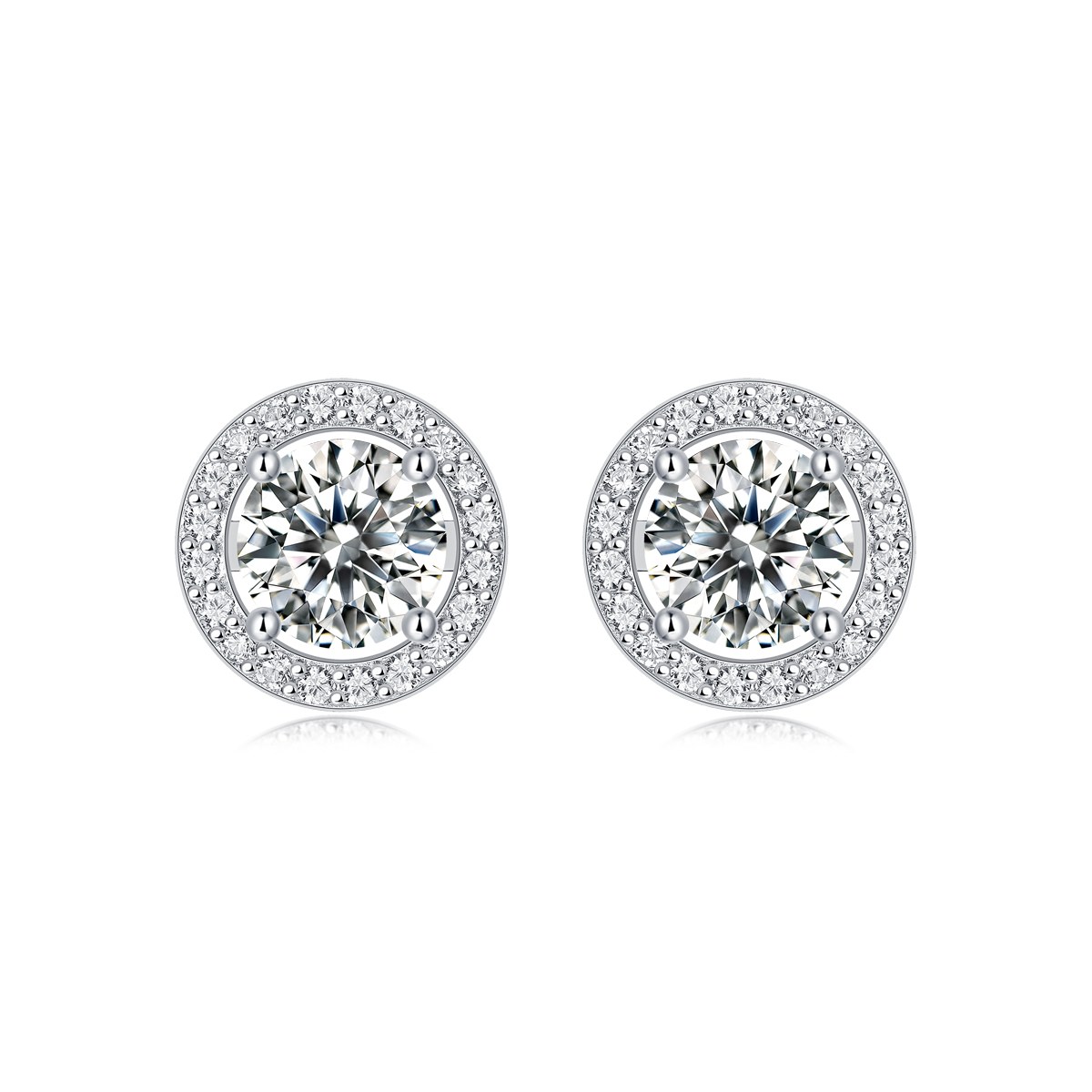
Most "moissanite vs diamond" articles are written to sell you one or the other. This one isn't. Diamond is diamond, moissanite is moissanite — two different stones, and the question "which is better" is the wrong one. The right question is: better for what, at what price? Here's the comparison stripped of the sales pitch.
The three numbers that actually matter
When people compare stones, they're really asking about three things. Here they are without the marketing.
Hardness. Diamond is a 10 on the Mohs scale — the hardest natural material we know. Moissanite is 9.25. On paper diamond wins, and that's the end of that conversation. In practice, anything above roughly 9 resists scratching from almost everything except another stone of equal hardness. Your setting will show daily-wear scars long before a well-set moissanite does — especially in silver, which is softer than either stone.
Sparkle. This is where the "diamond is brighter" assumption quietly falls apart. Moissanite has a higher refractive index than diamond (2.65 versus 2.42) and measurably more fire — the colored flashes light throws as it splits. A moissanite will put out more rainbow than a diamond of the same size. Whether that's a feature or a flaw depends entirely on taste: some people find the extra fire beautiful, others find it too flashy to pass as a diamond.
Price. This is the number that settles most decisions, and it isn't close. A one-carat moissanite typically costs around 90% less than a comparable diamond. Not because it's inferior, but because it's lab-created and abundant, while mined-diamond supply is deliberately managed to hold prices where they are.
Where moissanite genuinely wins
Moissanite isn't a "diamond substitute" — that framing sells it short. It wins on its own terms in a few specific places.
First, everyday wear without anxiety. This is the one nobody puts in the spec sheet. When a stone costs a fraction of a diamond, you wear it differently. You stack it, you sleep in it, you stop treating it like a savings account. Lose it and you're not devastated; you get over it. For jewelry that's meant to be worn, that's a real feature, not a compromise.
Second, fire at a price you can live with. If what you actually want is maximum sparkle, moissanite gives you more of it per dollar than anything else that's commonly set in jewelry.
Third, the ethics are simple. Lab-grown means no mining footprint, no chain-of-custody anxiety, no "can I verify where this came from" homework. For a growing number of buyers, that's the deciding factor before price even enters it.
Does moissanite look fake?
This is the question hiding behind a lot of "moissanite vs diamond" searches, so let's answer it directly.
If "fake" means "not a diamond," then yes — moissanite is not a diamond. It's a real gemstone with its own name, its own chemistry (silicon carbide), and its own optical behavior. If "fake" means "cheap-looking or obviously plastic," the honest answer is: under about one carat, most people can't reliably tell a well-cut moissanite from a diamond at normal viewing distance, especially once it's set and worn. The giveaway is the extra fire — moissanite throws more colored flashes — and in larger stones (two carats and up), that rainbow effect becomes harder to miss.
The pragmatic takeaway: if your goal is to pass a moissanite as a diamond, size down and accept that under close inspection it won't fool everyone. If your goal is simply to wear a genuinely beautiful, hard, brilliantly sparkling stone, stop worrying about whether it "passes." That framing is the trap.
Where diamond genuinely wins
Honesty cuts both ways, so let's be clear about where diamond still holds the high ground.
Resale. Diamonds hold meaningful resale value; moissanite essentially holds none. If you're buying a stone as a store of value or an heirloom to be liquidated later, the math favors diamond and always will.
Cultural weight. A diamond carries a century of meaning that no comparison article can copy or undo. If the person you're buying for wants a diamond — specifically, emotionally, not as a technical matter — no chart of refractive indices will change that. And it shouldn't. That's not a technical question; it's a human one.
How to choose, honestly
So how do you actually decide? By being honest about what the piece is for.
- Buying an investment or a once-in-a-lifetime heirloom you might one day sell → diamond.
- Buying jewelry to wear every single day and not think twice about → moissanite.
- The middle path most people miss: moissanite set in 925 sterling silver gives you most of the visual experience — the fire, the presence, the daily wearability — for a few percent of the cost. That's not a compromise; it's just the honest math.
The question was never "which stone is better." It's which fits the life you actually live. For everyday jewelry you never have to think about, the answer leans moissanite — not because it's a stand-in for diamond, but because it's the right tool for that particular job.
The short version
- Is moissanite a real gemstone? Yes — silicon carbide, first discovered in 1893, now lab-grown.
- Does it sparkle more than diamond? Yes — higher refractive index and more fire.
- Does it scratch in normal wear? No — it's a 9.25 on the Mohs scale.
- Does it hold resale value? No — buy it to wear, not to resell.
- Should I buy it? For everyday jewelry you'll actually wear, yes. For a resale heirloom, no.
Keep reading
More from the Journal