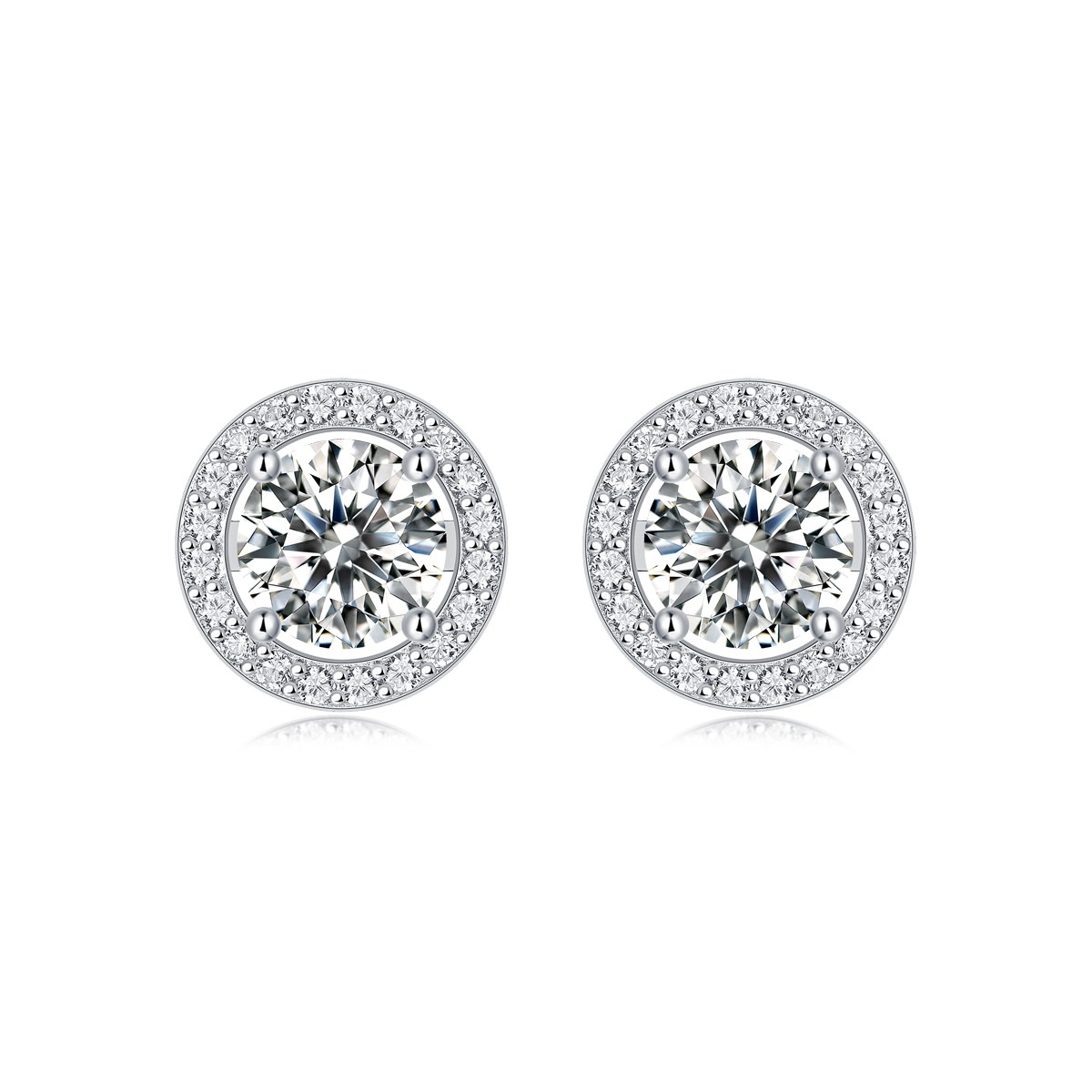
Somewhere along the way, most of us absorbed a rule about jewelry that's quietly ruining our outfits: your earrings should match your necklace. Same metal, same stone, ideally the matching set that came in the same box. It sounds safe. It sounds like good manners. It is, in fact, backwards.
The problem isn't the matching itself — it's what a perfectly matched set reads as. Two pieces that match exactly look like you bought them together. And "bought together" reads, to almost everyone, as a gift set: the kind that comes in a velvet box with a ribbon, given by someone who wanted to be safe, worn by someone who never took a second look in the mirror. It's not ugly. It's just… dated. Formal. Slightly try-hard. The moment you stop trying to match, jewelry stops looking like a costume and starts looking like a choice.
Why "Match Them" Is Backwards
Let's actually look at why the matching rule took hold, because once you see it, it's easy to let go.
The rule is a leftover from an era when jewelry was a symbol of status rather than a form of expression — when a woman's "parure" (the full matched suite of necklace, earrings, bracelet, and brooch) signaled that a family could afford to have everything made at once, in the same metal, by the same hand. A matching set was a flex. It said wealth the way a monogrammed suitcase did.
Most of us aren't trying to signal wealth when we get dressed in the morning. We're trying to look like ourselves — considered, effortless, put-together without trying. And those two goals are in direct conflict. A matched set signals "I'm wearing the set." A deliberate, slightly unmatched pairing signals "I chose these." One looks like a rule followed; the other looks like taste.
The other reason the rule is obsolete is that metals no longer have to agree. We've written before that mixing gold and silver isn't the crime our grandmothers were told it was. So the last shred of the old rule — "at least match the metal" — has quietly evaporated too.
The Real Rule: Visual Weight, Not Matching
If matching isn't the answer, what is? It's a single idea that's far easier to apply, and it instantly solves the whole problem: focal point.
Your eye can only land on one place at a time. An outfit is at its best when it gives your eye one thing to rest on — a statement, a sparkle, a single point of interest — and lets everything else support it. When your earrings and your necklace are both loud, they fight each other. Neither reads. The whole thing dissolves into visual noise, and the pieces end up looking smaller and cheaper than they are.
So the rule isn't "match." It's "one speaks, the other whispers." If your earrings are the star — big hoops, long drops, anything with real presence — your necklace should be a whisper or nothing at all: a fine chain, a tiny pendant, or bare skin. If your necklace is the statement — a bold pendant, a layered stack — your earrings should step back to studs.
This is also why the matching set reads so wrong: it gives your eye two equal focal points, which is the same as none. The eye doesn't know where to look, so it gives up and files the whole thing under "busy."
Quick Pairs That Almost Always Work
You don't need a chart. A few combinations cover nearly every situation, and they all follow the same one-speaks-one-whispers logic.
Statement necklace + tiny studs. The workhorse pairing. A bold pendant or layered chains at the neck, and small studs at the ears that add a glint without competing. This works with a collared shirt, a crew neck, a blazer — anywhere the neckline gives the necklace room.
Drop earrings + bare neck. If the earrings have length and movement, let them have the stage. Skip the necklace entirely, or wear a chain so fine it's almost invisible. This is the move for updos and off-the-shoulder tops, where earrings are the whole show.
Hoops + a short pendant. A casual classic that never reads as trying. The hoops give structure, the pendant gives warmth, and because neither is the "statement," they coexist comfortably.
Same tone, not same stone. If you want a thread of connection between earrings and necklace, don't match the pieces — match the temperature. Two cool, clear-stone pieces (like moissanite) will always feel related even if the shapes are totally different, because they catch light the same way. That's coordination, not matching, and it's the difference between "I chose these" and "I bought the set."
The Bottom Line
The honest takeaway is almost embarrassingly simple: stop asking "do these match?" and start asking "where do I want the eye to go?" Pick one piece to be the star, quiet the other one down, and you've already done better than the matching set ever would.
And if you're standing in front of the mirror, earrings in one hand and a necklace in the other, genuinely unsure — take one of them off. A single well-chosen piece, worn with confidence, beats a matched pair worn on autopilot every single time. Taste isn't about having more jewelry on. It's about knowing which piece to let speak.
Keep reading
More from the Journal