What Is Rhodium Plating? The 'White' Metal That Doesn't Actually Exist
October 16, 2026 · 6 min read
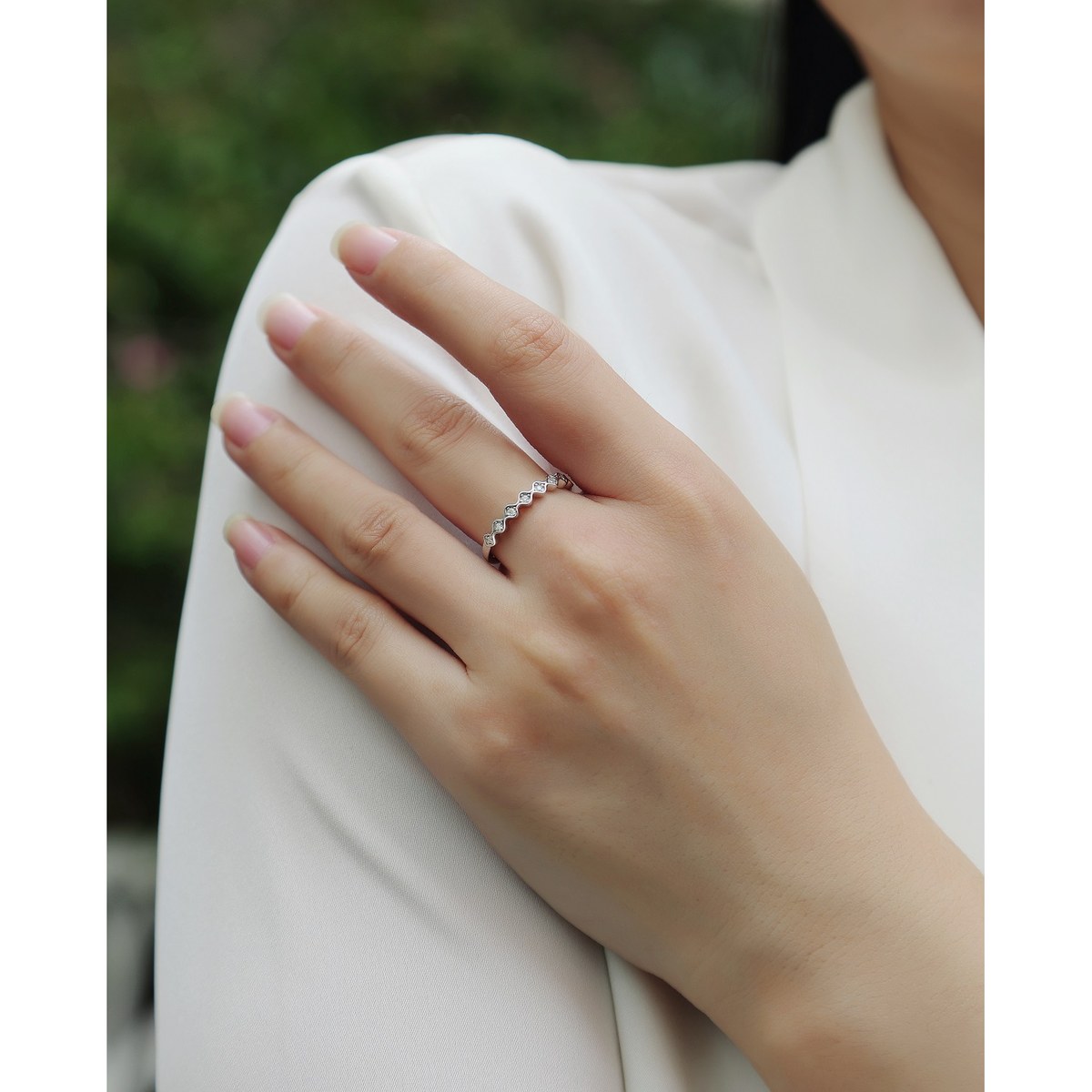
Let me tell you something that will quietly change how you look at every jewelry counter you pass from now on. There is no such thing as white gold. Not naturally. Every "white gold" ring, necklace, and band you have ever seen started its life as ordinary yellow gold — and it only looks white because it's been coated in a metal that is rarer, and ounce for ounce, more expensive than the gold sitting underneath it. That metal is rhodium, and once you understand what it is, a whole category of jewelry stops being mysterious and starts making honest sense.
What rhodium actually is
Rhodium is one of the six "platinum group" metals — a family of silver-white metals that includes platinum and palladium. Of that family, rhodium is the most expensive, typically trading several times higher than gold. It's also extraordinarily hard and famously resistant to tarnishing and scratching, which is exactly why it ends up on jewelry despite its price.
Here's the honest part most guides rush past: rhodium is almost never used as a solid metal. Almost nobody makes a "rhodium ring," because solid rhodium would be both exorbitantly expensive and punishingly difficult to work with. Instead, rhodium is applied as a microscopic coating — a process called plating — where a finished piece is dipped in a rhodium solution and an electric current bonds a layer just a few microns thick onto the surface. That's it. The layer is thinner than a human hair, and it does all the heavy lifting for a metal you'll never actually see.
So when a jeweler says a white gold ring is "rhodium plated," they mean the yellow gold has been given a bright, white, hard, tarnish-proof shell. The gold provides the value and the weight; the rhodium provides the color and the armor.
Why "white gold" is actually yellow
This is the counterintuitive part that ties the whole thing together. White gold is not a separate metal. It's yellow gold mixed with white metals like nickel, palladium, or silver to lighten its color — but even that alloy still comes out with a faint warm, yellowish tint. It never goes fully white on its own.
Enter rhodium. A fresh rhodium plate is what gives white gold that crisp, bright, blue-white shine people pay a premium for. Over time, that plating wears off, and the warm yellow undertone of the alloy starts to show through at the edges and the back of the band. This is why a white gold ring "turns yellow" after a year or two of daily wear — not because the gold is failing, but because the rhodium paint has worn thin and the real color underneath is quietly peeking out.
The fix is simple and routine: re-plate it. A jeweler dips the ring again, and it comes back looking brand new. But that's the honest trade-off of white gold that almost no one tells you at the counter: it is not a set-and-forget metal. It's a metal that quietly asks for a maintenance appointment every 12 to 24 months, forever.
What this means for silver (the part that saves you money)
Here's where it gets genuinely useful, especially if you're not in the market for gold at all.
Sterling silver, as we've covered here, is 92.5% pure silver and naturally a bright, white metal all on its own. Silver doesn't need rhodium to look white — it already is. But you'll sometimes see "rhodium-plated sterling silver" for sale, and it's worth understanding why a seller would add it.
There are two honest reasons. First, rhodium is harder than silver, so a plate adds scratch resistance and a brighter, whiter "flash" than silver alone. Second, and more importantly, rhodium doesn't tarnish, while silver does — that's the copper in the 925 alloy slowly reacting with air, as we explained here. A rhodium plate seals the silver so it stays bright without the cleaning routine silver normally asks for.
The trade-off is that the plating will eventually wear off, and when it does, you'll have rhodium-white patches sitting next to natural silver, which can look slightly different in tone. For everyday pieces, most makers — including us — prefer solid, unplated sterling silver with a good polish, so what you see is the actual metal, and a quick polish brings it right back. There's nothing hidden, and nothing to wear through.
Should you care about rhodium?
Honestly? Only a little, and only in two specific cases.
If you're buying white gold, yes — you should know it's plated, that the plate wears off in a year or two, and that the "yellowing" you might notice later is normal and re-platable, not a defect. That knowledge alone will save you from thinking your ring is broken when it's actually just asking for a fresh dip.
If you're buying silver, rhodium is mostly a bonus, not a requirement. Silver is already white and already beautiful. A rhodium plate is a nice-to-have that delays tarnishing; it is not the difference between "good" and "bad" silver. A well-made solid silver piece without any plating is a perfectly good — arguably more honest — choice, because there's no coating to wear through and no surprise tone difference underneath.
For everything else — the stone, the setting, the craftsmanship — rhodium is a footnote, not a headline. The metal that matters for most of us is the one we can see and feel, not the micron-thin layer hiding under a name we never fully understood.
The short version
- White gold doesn't naturally exist — every white gold piece starts as yellow gold and gets its white color from a rhodium plate.
- Rhodium is a platinum-group metal rarer and pricier than gold, used as a microscopic coating, not a solid metal.
- The plate is thin and wears off, which is why white gold "turns yellow" over time — it's normal, and re-plating fixes it.
- Silver is already white on its own and doesn't need rhodium to look the part.
- "Rhodium-plated silver" mainly delays tarnishing — a nice-to-have, not a mark of better quality.
- When you shop, ask what's under the plate. Knowing the real metal underneath beats trusting a shiny surface.
Keep reading
More from the Journal