Here's an uncomfortable truth about "best friend jewelry": a lot of it is bought out of a feeling that you should get her something, not because you found something she'd actually wear. The matching necklaces, the split-heart pendants, the charms stamped "BFF" — they're purchased in a rush two days before a birthday, handed over with genuine affection, and then quietly retired to a drawer within a month. Not because she doesn't love you. Because the piece was about the occasion, not about her.
So here's the counterintuitive rule that changes everything: don't buy "friendship jewelry." Buy jewelry for your friend. The difference is the entire point of this guide.
The problem with "friendship jewelry"
Friendship jewelry has a fatal design flaw, and it's not that it's ugly. It's that it's generic. A "best friend" pendant is designed to work for anyone — which means it fits no one in particular. It doesn't match her style, her metal preference, her neckline, or the way she actually gets dressed in the morning. It matches a concept (friendship), not a person (her).
The pieces people keep and wear are the ones that slot into their real life. A necklace they reach for because it goes with everything they own. A pair of earrings that matches their skin tone and their go-to outfits. Jewelry gets worn daily when it feels like theirs — and it feels like theirs when someone picked it for them specifically, not when someone picked it for the category of "best friend."
Think about your own jewelry box for ten seconds. The pieces you wear on repeat are the ones that fit you. The gifts that survived the years from other people? Same story. They fit you. That's the whole job.
Buy her jewelry, not "best friend" jewelry
So flip the brief. Instead of asking "what says best friend?", ask "what does she actually wear?"
That starts with three small observations you can make without asking a single awkward question:
What metal does she reach for? Look at her hands and ears next time you're together. Is it silver or gold? Most people have a hard preference, and they almost never wear the other one. Sterling silver — real 925 — is the safer default for anyone whose existing pieces lean cool or neutral, and it's genuinely kind to sensitive skin when it's nickel-free.
How much does she wear? Some people layer three necklaces and stack rings up to the knuckle. Others wear one small pair of studs and that's it. Gift for the person, not the hypothetical. A delicate everyday piece beats a statement piece for someone who keeps it minimal.
Is there a stone she loves? If she's ever mentioned loving the sparkle of a diamond but not the price, that's your opening — moissanite delivers the same fire for a fraction of the cost, and it's the kind of detail that proves you were actually listening.
The point isn't to overthink it. It's to look. Ten minutes of paying attention will tell you more than any gift guide ever could, because no guide has ever met your friend.
What actually gets worn (and what doesn't)
Let me be honest about the odds, because an honest guide beats a flattering one. These are the patterns we see again and again:
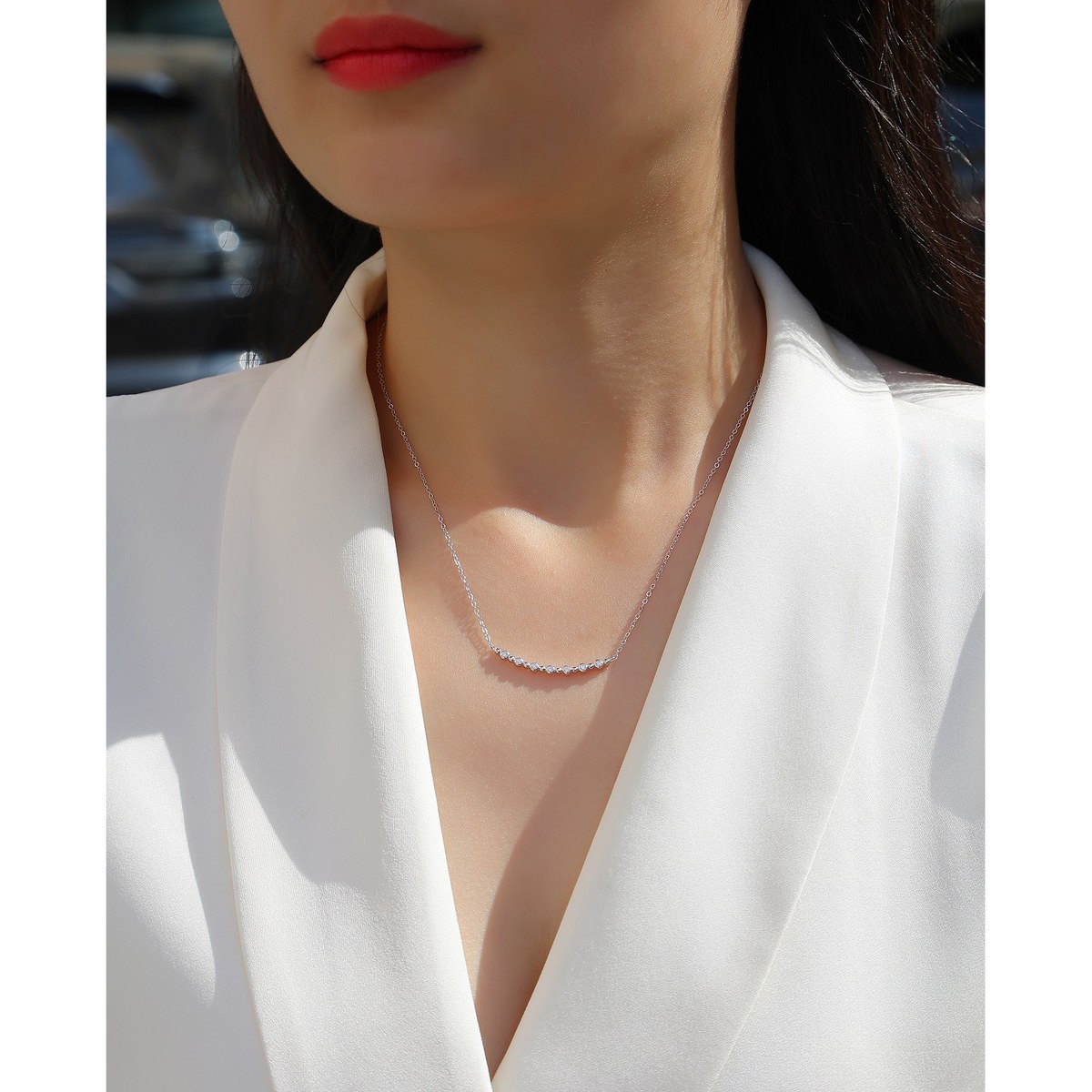
Worn daily, almost guaranteed: simple studs, a small pendant on a fine chain, a thin stacking ring. These are the "uniform" pieces — low-friction, match-everything, no decision required at 7 a.m.
Worn occasionally, happily: something with a bit more personality — a star-and-moon motif, a birthstone, a meaningful symbol — as long as it still fits her usual color palette. It becomes the piece she pulls out for lunches and dates and "I feel good today" days.
Retired to the drawer: anything that's loud, literal, or physically uncomfortable. Oversized "friendship" charms, pieces in the wrong metal, anything heavy enough to notice by lunchtime. These aren't bad gifts. They're just gifts for someone who doesn't exist.
The common thread in the "worn daily" column is restraint. The most-loved jewelry gift is almost always the simplest one that happens to be exactly right for the recipient. Which means the safest "wow" is usually a quiet one.
Five ideas that fit a real person
If you want concrete starting points, here are five directions that tend to work — not as a checklist, but as a way to translate what you've observed about her into a specific piece.
For the one who wears the same necklace every day: a fine-chain pendant with a small celestial motif — a moon, a star, a tiny spark. It layers with her existing chain or stands alone, and it never fights with an outfit.
For the one with a signature ear stack: a pair of studs in a shape she already collects. If she wears hoops, match the metal and scale; if she's a studs person, a small stone with real sparkle is the upgrade she'll actually use.
For the sentimental one: a piece that carries meaning without wearing it on its sleeve — a star she can keep close, a subtle charm that only the two of you understand. The best sentimental gifts are the ones that look like normal jewelry to everyone else.
For the one who "doesn't wear jewelry": this is almost always a matter of comfort, not taste. Start with something weightless and skin-friendly — a fine 925 sterling silver piece — and you'll often find she wasn't anti-jewelry, she was anti-uncomfortable.
For the one who loves a bargain-but-pretty find: a moissanite piece is the move. It gives her the big sparkle without the big price tag, and it's a quiet flex she can enjoy every time it catches the light.
None of these depend on the words "best friend" being stamped anywhere. That's the point. The friendship is the reason you're buying it; it doesn't need to be the label on the box.
The short version
- Don't buy "friendship jewelry" — buy jewelry for your friend. Generic "bestie" pieces are bought for the occasion and retired fast; the pieces people keep are the ones that fit them.
- Observe before you buy: her metal preference (silver or gold), how much she wears, and whether a stone catches her eye. Ten minutes of paying attention beats any guide.
- Worn daily beats worn once: simple studs, a fine-chain pendant, a thin stacking ring — restraint is what survives the drawer test.
- Sentiment without the label: a subtle star or a private symbol means more than a charm stamped "BFF," and it looks like ordinary, wearable jewelry.
- Comfort is the secret for "non-jewelry" people: a weightless, skin-friendly 925 piece often converts the reluctant into the daily-wearer.
Keep reading
More from the Journal