Chinese Jewelry Symbolism: Why the Most Romantic Pieces Never Say 'I Love You
September 28, 2026 · 5 min read
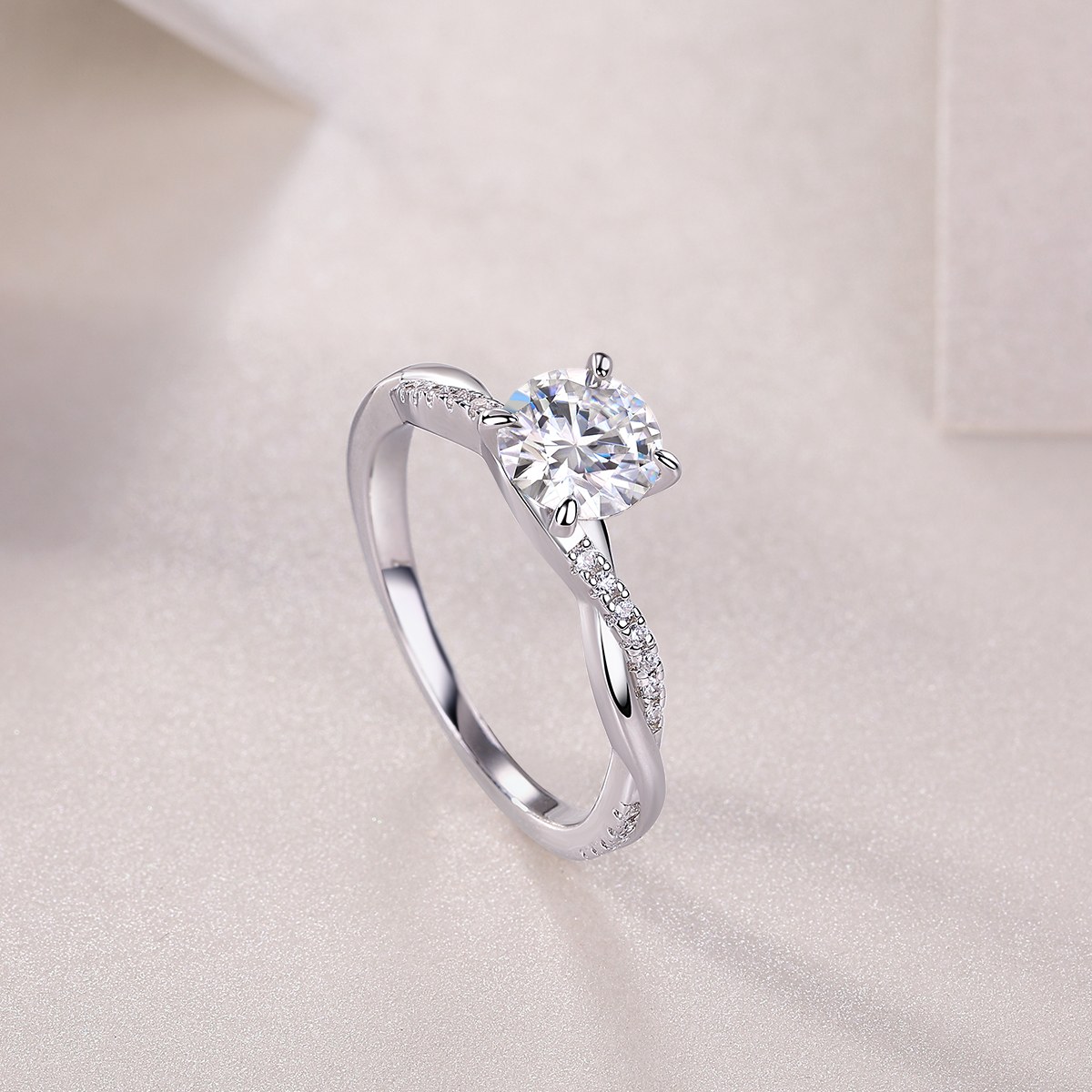
Here's a strange thing about the jewelry tradition behind our brand: the most romantic pieces in it almost never say "I love you." They say come back. They say the mountain has trees. They say I noticed you before you said a word. For a culture that invented half the world's love poetry, it's remarkably shy about the actual phrase — and that shyness is the whole point. Declaring a feeling outright was considered almost rude, like shouting the punchline. The skill was in the hint. And once you understand that, you understand why some jewelry carries weight for decades while other jewelry is just... metal.
Why "come back" beats "I love you"
Start with a tiny linguistic fact, because it explains more than any essay could.
In ancient China, there were two kinds of jade ring, and the difference between them was a single gap. A jue was a ring with a missing segment — a break in the circle. A huan was a complete, unbroken ring. They sound almost the same, and they were used the same way a modern person might use a message. The broken ring was given at parting, and it meant it's over, we're separating. The complete ring — huan — is a homophone for the word return. To give someone a whole ring was not to say "I love you." It was to say come back to me, however far you go.
That's a completely different grammar of affection. It doesn't state a feeling; it hands the other person a command and a promise folded into one object. The ring carries the message so the giver doesn't have to stumble over the words. And the message survives the moment — long after the sentence "I love you" would have faded into the ordinary, the ring keeps saying return every single time it's worn. If you've ever wondered why people hold onto a piece of jewelry for thirty years, this is the beginning of the answer: it's not the metal they're keeping. It's the sentence.
Meaning lives in what's left unsaid
The same instinct shows up everywhere in the tradition — the belief that the deepest things are communicated by not saying them.
One of the most famous lines of Chinese poetry is from a boatman's song, over two thousand years old, and its power is entirely in what it refuses to finish. It goes, roughly: the mountain has trees, the trees have branches — my heart delights in you, yet you do not know. The first half is obvious, even banal. The second half is the whole poem, and it never gets resolved. The love isn't declared and accepted; it's left hanging, directed at someone who may never hear it. The poem isn't about being loved. It's about the unbearable act of loving in silence.
That's what the best symbolic jewelry borrows. Not the specific image of a mountain, but the technique: leave space. A piece that gestures toward something — a knot with no loose end, a circle with no gap, a pendant shaped like an idea rather than a picture — invites the wearer to finish the thought themselves. That invitation is why symbolic pieces stay meaningful. A piece that spells everything out has nothing left for you to bring to it.
How to tell a real meaning from a marketing one
Here's the honest part, because "meaningful jewelry" has become a marketing category, and most of what's sold under that label isn't meaningful at all — it's decoration with a story attached after the fact.
So how do you tell the difference? Three tests, and they're harder than they look.
Is the story specific? A real symbol points to something particular — a specific poem, a specific homophone, a specific moment in a specific tradition. A marketing symbol points at a vibe. "This represents love" is not a meaning; it's a noun. "This ring is a huan, a complete circle, given to mean return" is a meaning. Specificity is the tell. If the story could be swapped onto any other product without losing anything, it wasn't really attached to this one.
Does the meaning survive without the product? This is the harsher test. Ask: would this story still move me if I heard it with no jewelry in front of me? The boatman's song survives. The parted-ring's return survives. If the story only works when there's a price tag nearby, you're looking at a sales pitch, not a meaning.
Was it invented for you, or carried to you? Real symbolism is usually old — it accreted meaning over centuries and arrived at the jeweler's bench already full. Invented symbolism is minted last Tuesday and handed to you as if it were ancient. Both can be beautiful, but only one of them will still mean something to the person wearing it in ten years. Know which one you're buying.
What to actually look for
If you're buying jewelry because it means something — for someone specific, or for yourself — here's how the pieces in this tradition break down, honestly:
- The knot — a continuous line with no beginning and no end. It's one of the few motifs that means the same thing everywhere it appears. If you want the full story, we've written a guide to the Chinese knot separately.
- The red thread — fate, connection, the idea that some people are tied to you before you meet them. It's the most searched and the most diluted motif, which is exactly why we wrote a plain account of what it actually means.
- The complete circle — the huan, the unbroken ring, the piece that says return. It's the quietest of the three and, for a lot of people, the most loaded, because it carries a command rather than a compliment.
- The stone — and here's the thing most "symbolism" guides skip: the meaning of a piece is carried by the setting and the motif, not by the stone's price. Whether you choose moissanite or diamond, the story rides on the form around it. A meaningful ring in silver means exactly as much as the same ring in anything else — the meaning doesn't come from the metal's cost, which is worth remembering the next time someone tries to upsell you on "forever" by pointing at a bigger stone.
The short version
- Real symbolism hints; it doesn't declare. The tradition says "come back," not "I love you."
- *A complete ring (huan) means return; a gapped ring (jue) meant parting.* One gap changes the whole message.
- The deepest pieces leave space — they invite you to finish the thought, which is why they stay meaningful.
- Test a "meaningful" piece: is the story specific, does it survive without the product, and was it carried to you or invented for you?
- The meaning rides on the form, not the price. A symbolic silver ring carries its story as far as any stone will.
Keep reading
More from the Journal