Sweater Weather Is Jewelry Season: Why Winter Layers Make Your Pieces More Visible, Not Less
November 2, 2026 · 6 min read
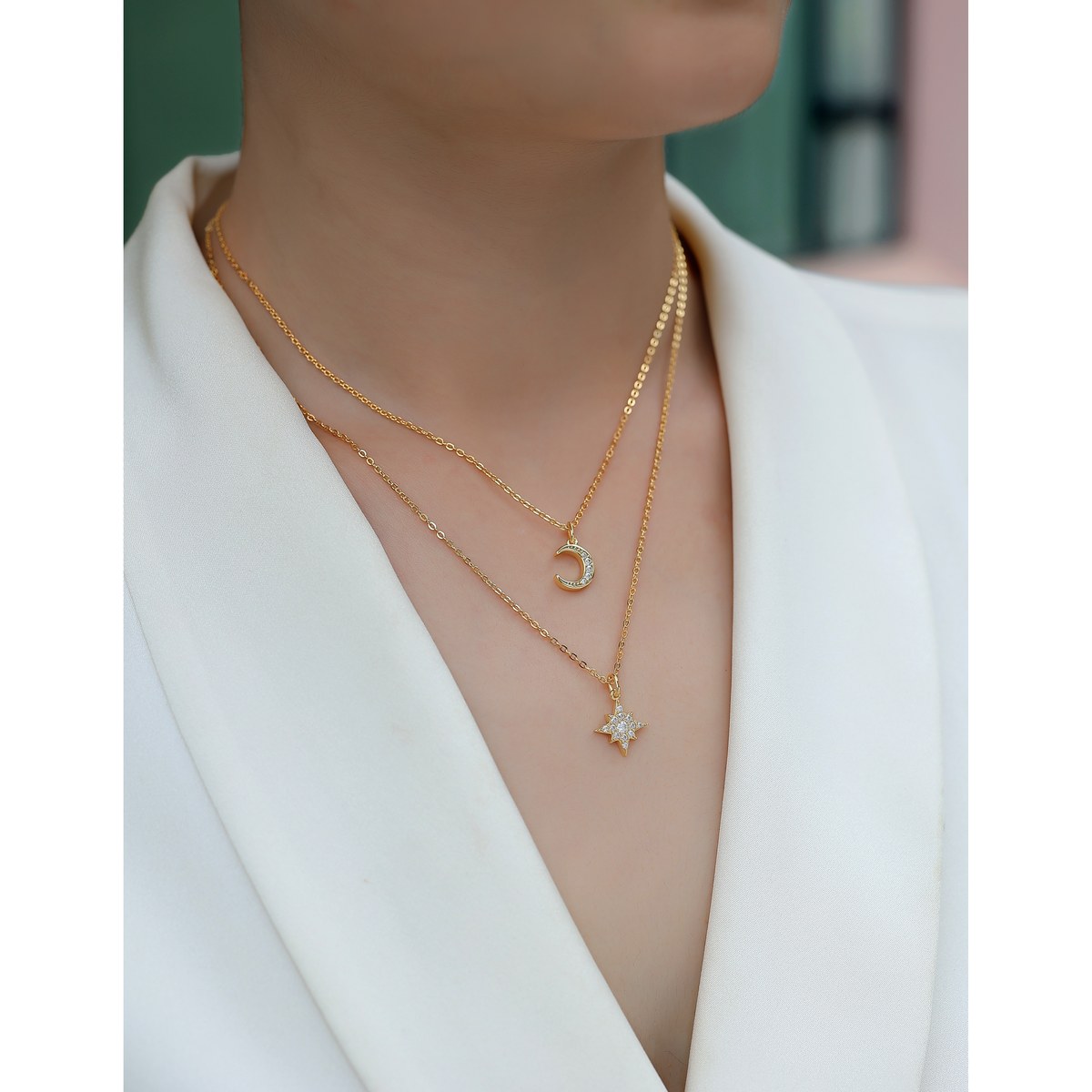
Every winter, most of us do the same quiet thing: we pack our jewelry away and surrender to the sweater. We tell ourselves the turtleneck will swallow the pendant, the scarf will tangle the chain, the gloves will hide the ring. By December, the jewelry box is a museum of summer, and our necks, wrists, and ears have gone dark.
That instinct is exactly backwards.
Sweater weather is not the season jewelry disappears. It is the season jewelry finally gets the audience it deserves. In summer, a necklace competes with bare skin, sunglasses, sundresses, and a hundred other visual distractions. In winter, fabric becomes a neutral, unbroken backdrop — a solid canvas of wool and cashmere with no competition. A single gold chain against a dark sweater is the most legible, high-contrast thing you will wear all year. The cold didn't hide your jewelry; it hung it on a gallery wall.
This is not a guide about "rescueing" your jewelry from winter. It's a guide about finally using winter the way a stylist would.
The Turtleneck Isn't the Enemy — It's a Frame
The turtleneck is the piece everyone blames for killing their necklace game. In truth, it's one of the best settings a necklace can ask for, because it removes every decision you'd otherwise stress over.
A turtleneck covers your collarbone and most of your neck, which means two things. First, you can't wear a delicate 14-inch choker without it disappearing — but you were never going to win that fight, and now you don't have to try. Second, the only thing left visible is the upper chest, a small, clean triangle of fabric that acts like a built-in frame.
The rule is simpler than people think: go longer, or go statement. A chain that sits at 20 inches or more will rest cleanly on the sweater's surface instead of fighting the fold, and because the fabric is matte and still, the chain reads crisply. Even better, a single bold pendant — something with visual weight, like a carved motif or a gemstone with a distinct silhouette — becomes the entire outfit. On bare summer skin, that same pendant would be one of ten things happening at once. On a cream turtleneck, it's the only thing happening.
If you prefer earrings over necklaces, winter is your season too. Cold weather means hair is often down, hats are on, and the neck is busy. A pair of earrings with a clean, geometric line — hoops, drops, or studs with presence — does all the work from the side of the face where a scarf and collar aren't competing. The turtleneck frames the face; the earring punctuates it.
Scarves, Coats, and the Honest Truth About Layering
Here's where I'll be honest with you, because most styling guides won't be: when you're wearing a scarf and a coat, nobody is going to see your necklace. And that's fine. You don't style jewelry to be seen at every second of the day — you style it to be seen in the moments that matter, and those moments are when the coat comes off.
The move is to think of your jewelry as an interior detail rather than an exterior one. When you're buttoned up on the street, keep the heavy, snaggable pieces off. A smooth chain under a coat is asking to catch on a zipper or a scarf's fringe; a textured ring or a pair of studs is not. The moment you step inside and unwrap, the necklace reappears against your sweater, and it reads as a deliberate reveal — the way a suit jacket opens to show a pocket square.
A few practical rules that save real frustration. Avoid open-link chains and claw prongs when a scarf is in play; they catch, and a broken clasp in a cold coat line is a specific kind of misery. Tuck longer chains inside until you're indoors if you're layering a chunky knit over them, because wool fibers grip metal and pull. And keep a small jewelry pouch in the coat you wear most — not for the jewelry you're wearing, but for the piece you'll want to take off before a heavy meal, a long drive, or a moment where it's just in the way.
Rings and Winter: The Smallest Change, the Biggest Difference
If there's one piece of winter jewelry advice that pays off more than it should, it's about rings — and almost nobody thinks about it.
Cold hands shrink. That ring that fits perfectly in July may slide loosely in January, especially in a heated room after you've been outside. This isn't a reason to stop wearing rings; it's a reason to be deliberate about which finger and which hand you choose. A ring worn on the index or middle finger of your dominant hand catches on gloves, pockets, and everything else a winter day throws at you. Move it to a less active finger, or size it up half a step for the season, and the problem quietly disappears.
There's also a styling reason to pay attention to your hands in winter. Your hands become more visible in cold weather than you realize — cupping a warm mug, reaching for a coat hook, holding a door. A single well-made ring, especially one with a matte or softly hammered finish rather than a high polish, looks quietly substantial against knit gloves and dark sleeves. It doesn't shout. It just sits there, catching the low winter light, and reads as someone who thought about the details.
The One Piece of Honest Advice
The deeper point behind all of this is embarrassingly simple, and it applies to every season, not just the cold ones: jewelry looks best when it has room to be seen, and winter gives it that room for free.
We spend the warm months layering, stacking, and adding until our jewelry starts competing with itself. Winter forces a kind of restraint — a longer chain here, a single pair of earrings there, one good ring instead of five. And restraint, it turns out, is exactly what makes a piece look expensive. Not the price tag. The space around it.
So before you close that jewelry box for the season, pull out one piece — just one — and put it against your heaviest sweater. You'll probably notice what the mirror has been trying to tell you all along: the piece didn't get smaller in the cold. It got the stage it was waiting for.
Keep reading
More from the Journal