How to Wear Jewelry to Work: The Rule Isn't 'Less' — It's 'Deliberate
October 27, 2026 · 6 min read
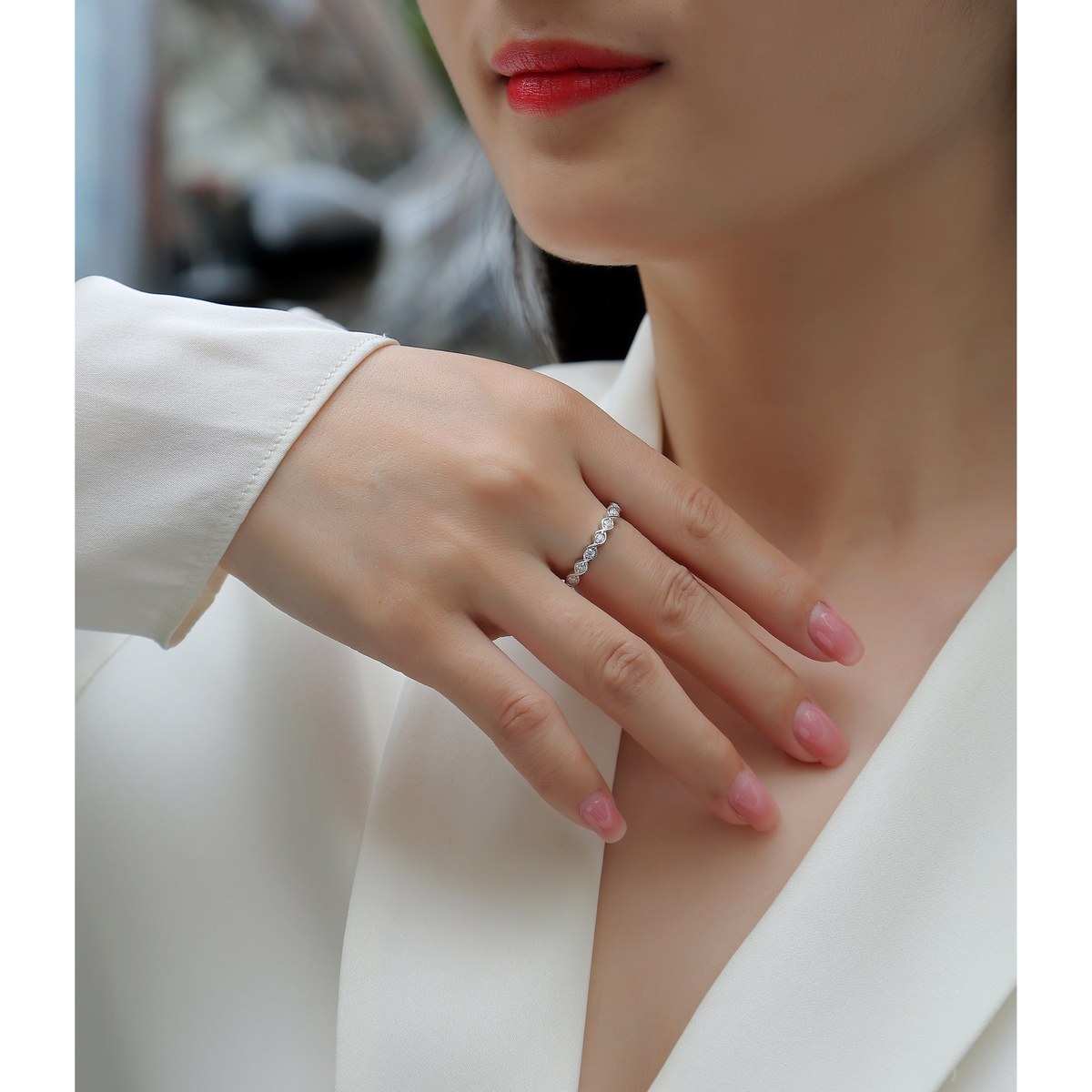
Every piece of work-style advice you've ever read says the same thing: keep your jewelry minimal. Studs, not chandeliers. A thin chain, not a statement necklace. Nothing that "distracts." It's so universal it feels like common sense — and like a lot of common sense, it's mostly wrong, or at least badly incomplete.
The reason isn't that you should pile on more jewelry at the office. It's that "less" and "distracting" are not the same thing, and most people, following the rule too literally, end up wearing jewelry that distracts more — just in a quieter, more insidious way. The woman wearing one bold, deliberate piece reads as more confident and more put-together than the one wearing five tiny pieces that don't add up to anything. The actual rule has nothing to do with quantity. It's about whether your jewelry is a decision or an afterthought.
The Real Rule: One Decision, Not None
Here's the honest version of the advice, and it's shorter than the version you've been given: at work, your jewelry should look like you chose it on purpose. That's it. Not "less." Not "barely there." Deliberate.
The problem with tiny, scattered jewelry isn't that it's too much. It's that it reads as clutter — a small necklace plus small earrings plus two thin rings plus a bracelet that all whisper at once, and together say nothing. It's the jewelry equivalent of a sentence with no subject. Whereas a single strong piece — a clean silver cuff, a sculptural ring, a short pendant with weight to it — reads as a point of view. It says you finished your outfit rather than abandoned it halfway.
So the working rule is the "one statement" rule: pick one piece to be the whole story, and let the rest of the jewelry go quiet or go home. It's not about wearing less. It's about wearing one thing on purpose.
What Actually Distracts (It's Rarely the Size)
If you want to know why the "minimal" advice got so popular, it's because somewhere along the way, "distracting" got conflated with "big." But distraction at work is almost never about the size of a piece. It's about three specific things, and they're worth naming because they're the real reason jewelry gets noticed in meetings for all the wrong reasons.
The first is literal noise. Bangles that clack against the desk every time you reach for the mouse. A long earring that swings and brushes your jaw while you talk. A necklace that taps against your laptop. Sound is the single most distracting thing jewelry can do in a quiet room, and it has nothing to do with how the piece looks — it's about how it moves.
The second is the fidget. A ring you twist, a chain you pull, a charm you run your thumb over while someone's talking. If your jewelry is a toy your hands can't leave alone, it's telling the room you're nervous, whether you are or not. The most professional piece of jewelry is one you forget you're wearing.
And the third — the one nobody mentions — is discomfort. The earring that pinches so you keep touching your ear. The ring that's slightly too tight. The necklace you keep adjusting because it sits wrong. Anything that makes you fiddle is automatically distracting, even if it's small and "minimal." Fit isn't a vanity detail at work; it's the whole game.
A Kit That Covers Every Meeting
So what do you actually wear? Here's the honest, practical version — not a shopping list, but a logic you can apply to whatever you already own.
Build from three quiet anchors: a pair of simple studs or small hoops you can wear all day without thinking about them, one short necklace or pendant that sits inside or just at the neckline of your work clothes, and one ring that fits well. That's the daily baseline, and it should be so comfortable you genuinely forget it's there.
Then, for the day that matters — the presentation, the interview, the meeting where you want to walk in with more presence — you escalate by swapping one of those anchors for something with more weight. Keep the studs, lose the delicate chain, and put on a bolder necklace. Or keep the ring and add a single sculptural cuff on the opposite wrist. One swap, not a costume change. The point is that "dressing up" at work is a small, controlled escalation — the same person you always are, just with one deliberate piece that says today is different.
The Warm Part
The reason all of this matters is gentler than it looks. Work is where most of us spend most of our waking hours, and jewelry is one of the few ways we get to carry something of ourselves into rooms that can otherwise feel gray and interchangeable. The goal was never to erase that. The goal is to let it show up cleanly — one honest piece, worn on purpose, instead of a scattered handful worn out of habit.
So forget "less." Wear the thing you actually love. Just wear it like you meant it, and leave the rest in the drawer.
Keep reading
More from the Journal