The Emotional ROI: Are You Buying Gold, or Are You Buying a Memory? A Guide to Sentimental Value.
November 2, 2026 · 7 min read
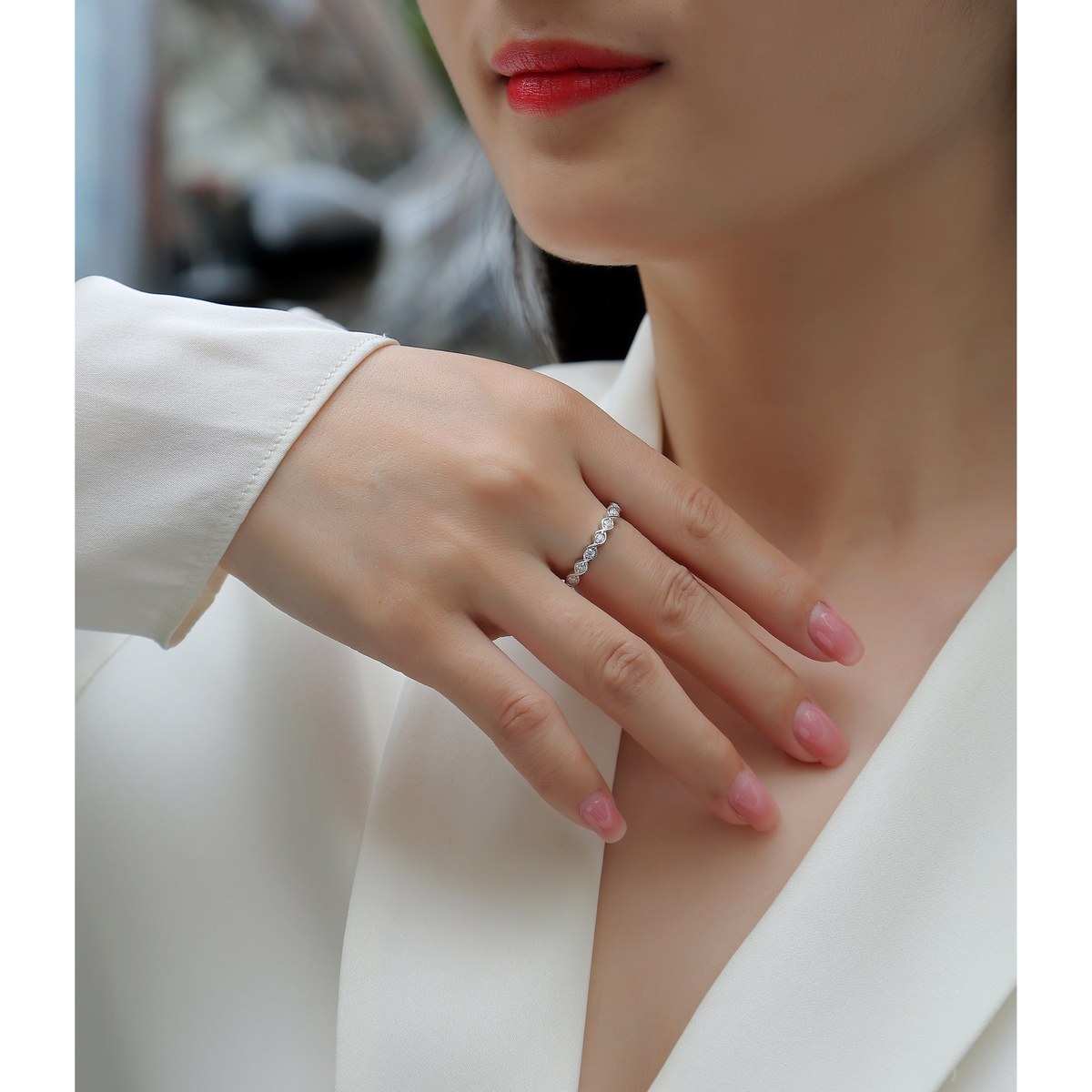
The Emotional ROI: Are You Buying Gold, or Are You Buying a Memory?
We've been taught to see jewelry through the lens of hard metrics: carat weight, metal purity, and market fluctuation. In the world of fine goods, investment is King. If you’re buying a piece of jewelry, you’re usually looking for quantifiable value—something that holds its worth against inflation, something that shines brightly enough to pass a diamond loupe. It's a logical, calculated transaction.
But what if the most valuable piece in your jewelry box isn't the one with the highest metal content? What if the piece you treasure most—the one that makes you pause and smile—is the one that defies market logic?
Many of us treat jewelry like a stock portfolio: buy high, sell high. We are told to focus only on investment pieces, leaving sentimental, colorful, or quirky items in the "hobby" bin. We’re taught that if it doesn’t scream "asset," it doesn't "count." This is where the common narrative fails us. We spend so much time optimizing our purchases for resale value that we completely ignore the piece’s emotional return on investment—the ROI of a memory.
This guide isn't about buying assets. It's about recognizing that the true currency of fine craftsmanship is feeling. It’s about understanding that some of the most beautiful pieces are designed not to be sold, but to be lived in.
### The Great Misunderstanding: Value vs. Value
When you browse online, you are presented with a paradox. On one side, you see the glittering, scientifically perfect stone—Mohs hardness tested, carats listed. On the other, you see the unique, slightly imperfect piece: the asymmetrical setting, the muted color, the piece that reminds you of your grandmother's mismatched brooch collection.
The common mistake is equating commodity value (the market price of the materials) with cultural value (the meaning, the story, the cultural context). We tend to give 90% of our attention to the first, and a casual glance to the second.
Consider a pair of earrings. If they are made from solid, high-karat gold and feature certified diamonds, they have a high commodity value. But if they are handcrafted using ethically sourced, upcycled metal, featuring stones that were once part of a local artisan's storytelling palette, their commodity value might be lower. Yet, for the wearer, they often carry a much higher cultural value. They are a piece of narrative.
The industry needs to start valuing the story as much as the setting. The story is what keeps the piece relevant decades after the market price of the metal has stabilized.
### Crafting Sentimental Worth: The Artisan’s Advantage
For the sophisticated, discerning buyer—the one who appreciates craft over mere carat weight—the artisan’s mark is everything.
Mass-market jewelry relies on replicable perfection. It's beautiful, yes, but it lacks fingerprints. The artisan, conversely, embraces the imperfection as proof of human engagement.
Look at the settings. Are they pristine, machine-smooth, and uniform across every piece? Or do you notice a slight variation in the soldering work, a minor asymmetry in the bezel, a unique twist in the metal that suggests the hand of the creator? These are the fingerprints of quality craftsmanship. They are evidence that a person spent time, effort, and intention on the object.
When you choose an artisan piece, you are not just acquiring an item; you are acquiring a limited edition piece of human time. You are sponsoring a skill, a life, and a tradition. This is an investment in craftsmanship that often outlasts the cyclical trends of the commodity market.
### The Wardrobe of Memories: Pairing Intent with Emotion
Jewelry shouldn't be treated like a collection of interchangeable accessories. It should be treated like an extension of your personal narrative.
The biggest mistake in styling is selecting a piece based solely on what "matches" the current trend or the most expensive item in your drawer. Instead, I encourage you to approach it by asking: What emotion do I want this piece to evoke?
If you want to feel grounded and strong, perhaps a chunky, unfussy piece of oxidized silver or rough-cut jasper will resonate more deeply than a delicate diamond drop. If you want to feel mischievous and bright, a cluster of vibrant, colorful, slightly chaotic semi-precious stones might be the answer.
A truly memorable piece is a conversational piece. It demands a question from the person wearing it, and a smile from the person wearing it. It has a conversation starter built into its very structure.
***
Remember, the goal of jewelry is never to generate wealth (though that can be a lovely bonus). The goal is to capture and communicate who you are. To choose a piece is to choose a chapter of your story. Make that chapter unforgettable.
---
Keep reading
More from the Journal